Under the wave of global energy transformation and the promotion of the "double carbon" goal, hydrogen energy, as a clean and efficient future energy carrier, has become an important direction for the upgrading of the energy industry, while seawater hydrogen production has the unique advantage of unlimited resources to unlock a new track for green hydrogen production. In Qingdao, China's first factory seawater hydrogen production research project successfully completed 1000 hours of stable operation, officially entered a new stage of large-scale green hydrogen production, this breakthrough how to break the bottleneck of hydrogen production resources, outline a new picture of green energy.
in Sinopec Qingdao refining hydrogen energy "production, research and processing" demonstration park, there is a hydrogen production device for China's first factory seawater hydrogen production research project, which will be put into operation at the end of 2024 and has completed a number of scientific research tasks on green hydrogen production. It is worth mentioning that the "factory seawater hydrogen production" mode adopted in this project, the source of raw materials and the destination of products are closely related to the daily production of the factory.
What is hydrogen production from seawater? Hydrogen energy is a clean and efficient energy carrier. The traditional technology of hydrogen production by electrolysis of water is highly dependent on fresh water resources with high cleanliness. The seawater hydrogen production is directly to seawater as raw material to produce hydrogen, its biggest advantage is to get rid of the dependence on fresh water resources.
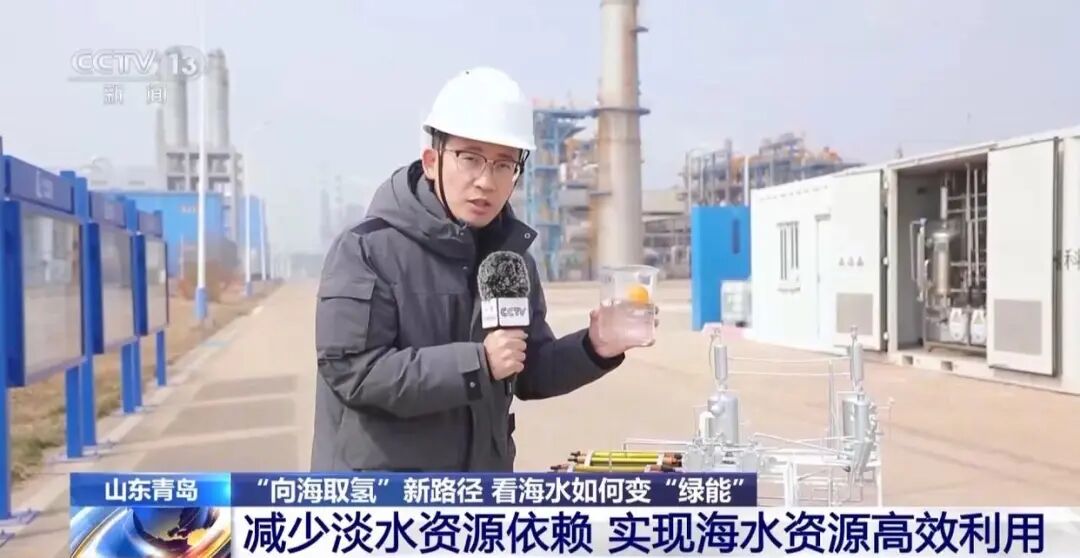
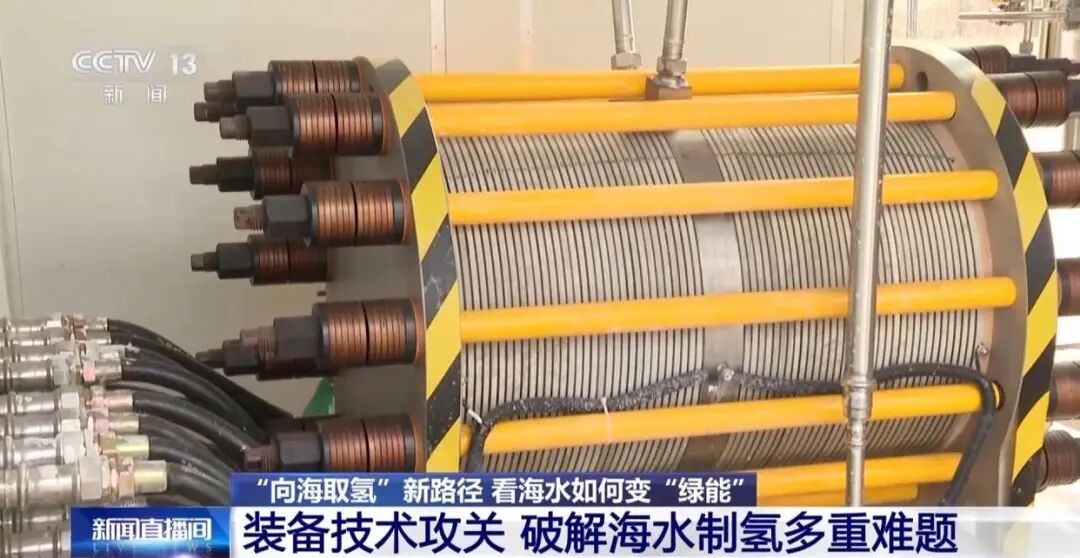
How is hydrogen production from seawater realized? Seawater contains about 3% salt and a variety of impurities, which can easily corrode electrolysis equipment or even damage equipment. In order to solve these problems, engineers used part of the green electricity produced by the water photovoltaic power station in the demonstration park as the power of electrolyzed water in the project. Through the use of anti-seawater corrosion, electrolyzers that inhibit chlorine generation and a series of special equipment, key technologies such as seawater pretreatment system were overcome to realize direct electrolysis of seawater to produce hydrogen, which can produce 20 cubic meters of green hydrogen per hour.
cracked the technical problem, where will the hydrogen produced by seawater be used? In fact, its application scenario is around us. The "hydrogen energy sharing bicycle" here is equipped with a solid hydrogen storage tank, which can hold 80 grams of hydrogen, and it can make the vehicle travel about 100 kilometers.
In Qingdao Port, hydrogen-electric tugboats powered by hydrogen energy and related port lifting equipment are also used there, which effectively reduces carbon emissions during operations. In addition to daily life, the hydrogen produced by this project can also be incorporated into the plant's refining and chemical pipeline network system to provide cleaner raw materials for petroleum refining and chemical production.
it is predicted that by 2030, the installed capacity of hydrogen production from renewable energy in China is expected to exceed 0.1 billion kilowatts. in the future, seawater hydrogen production technology will continue to move towards a larger scale, green and industrialization, helping the high-quality development of thousands of industries.