recently, jingke energy and the core distributor in the Netherlands formally signed a 10.25MW flying tiger 3(Tiger Neo 3.0) high-efficiency component supply agreement . This batch of modules will fully enter the Dutch household and industrial and commercial distributed photovoltaic market, providing a better solution for local households and enterprises to meet the challenges of energy transition.
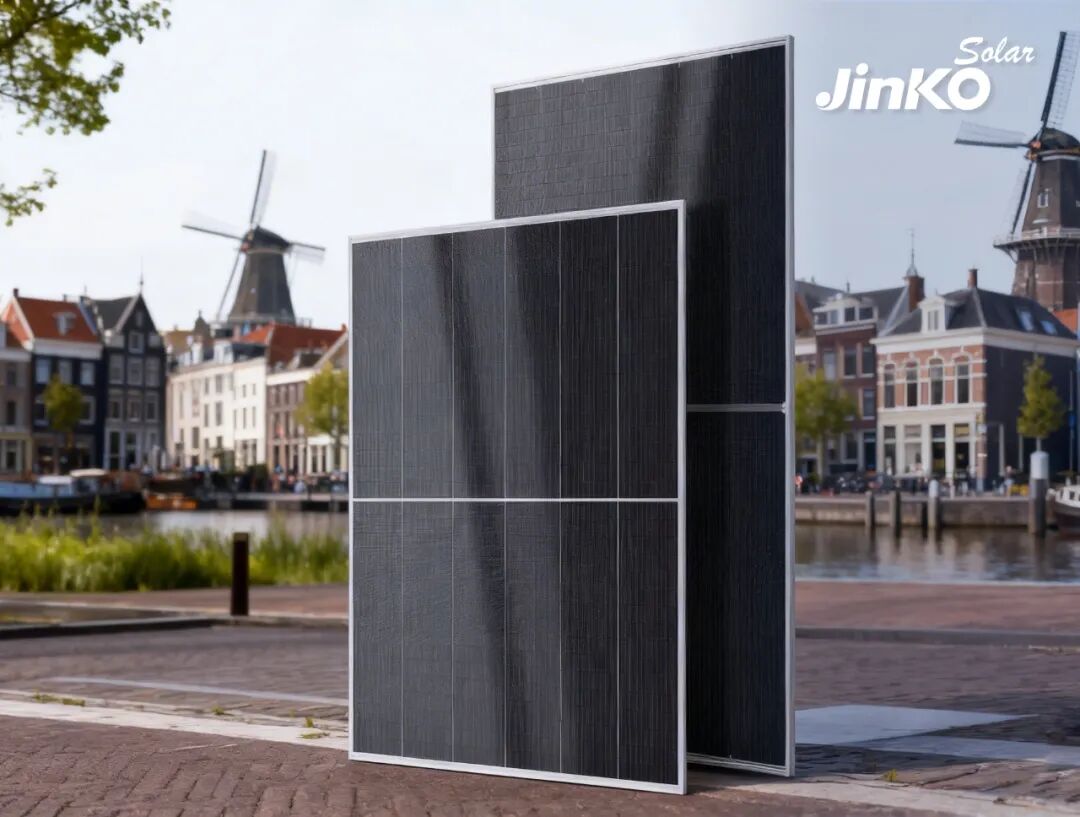
The Netherlands, a country known for its windmills, is actually the" hidden champion "of distributed PV in Europe". The roof density here is among the highest in Europe, but the sun is not a generous gift-the average annual sunshine duration is only about 1500 hours, and rainy, cloudy and foggy are the normal daily climate. For Dutch distributors, customers are most concerned not only about "how much electricity can be sent on a sunny day", but also about "whether the components can work on a sunny day".
weak light but not weak electricity: turning "cloudy days in Holland" into "continuous benefits"
in Holland, the real test of the strength of components is not the scorching sun, but the mist in the morning, the clouds in the afternoon, the dim light in the evening, and the rainy weather for more than 200 days in a year. Relying on the low leakage current characteristic of n-type TOPCon technology, the flying tiger 3 component can still maintain 95%-98% relative power output in the low irradiation range of 100-200W/m. third-party empirical data show that under the same type of weak light scenario, its power generation in the morning and evening periods can be increased by up to 8% compared with BC components-this means that even in the common "gray" weather in Holland, the components are still steadily creating value.
24.8% efficiency: let every inch of Dutch roof "calculate carefully"
Dutch cities are dense, with townhouses and apartments as the main residential buildings, and the roof area is generally limited. Although industrial and commercial roofs are relatively abundant, they also face the balance between installation space and BOS cost. The front efficiency of the flying tiger 3 component exceeds 24.8 and the power of reaches 670W, which can realize higher installed capacity under the same installation area and help users maximize the utilization rate of roof resources. For distributors, high-power components mean fewer installation points, lower logistics and warehousing costs, and stronger terminal competitiveness.
the landing of the flying tiger 3 order is the best answer to the proposition of "how to achieve high power generation income in low irradiation areas" . In Holland, a land where the sea is competing for land and the clouds, Flying Tiger 3 is using its continuous output under every weak light to provide more reliable guarantee for the green energy of local users.