[Shenzhen, China, March 25, 2026] The 2026 Huawei China Digital Power Partner Conference was held in grand style in Shenzhen, Guangdong Province. Hou Jinlong, director of Huawei Company and president of Huawei Digital Energy, delivered a speech at the opening ceremony of the conference. He said: Huawei Digital Energy focuses on the three core areas of new power system, electric travel and AI data center, deeply integrates digital technology, artificial intelligence, power electronics and energy storage technology, deeply cultivates various subdivided scenarios, and continuously creates products and solutions with core competitiveness. Huawei Digital Power will adhere to its core strategy of “technology-driven innovation, deep scenario engagement, and value creation,” working hand in hand with partners to seize new opportunities in the energy transition and jointly build a thriving ecosystem for the digital energy industry.
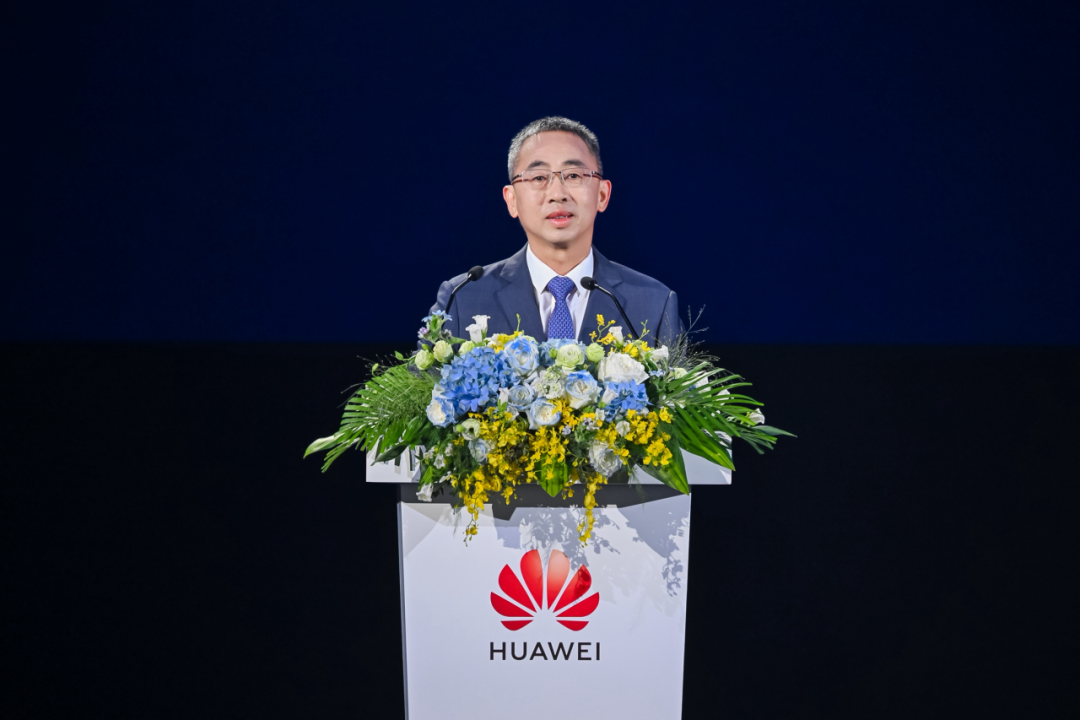
Director of Huawei Corporation, President of Huawei Digital Energy Hou Jinlong

At present, the global energy landscape is undergoing profound and extensive changes. The energy revolution and the digital revolution are deeply integrated, and the digital energy industry has entered a critical window period for high-quality transformation. This change is not a simple single technology iteration, but a systematic reconstruction covering the whole chain of energy production, transmission, storage and use . Each link contains unprecedented development opportunities. Hou Jinlong pointed out that the structure of energy production and consumption is undergoing a fundamental reshaping, and new energy has officially entered the ranks of mainstream energy sources. By the end of 2025, China’s cumulative grid-connected installed capacity of wind and solar power will exceed 1.8 billion kilowatts. For the first time, the combined installed capacity of wind and solar power will surpass that of thermal power, marking the official entry of China’s energy generation mix into a new “new-energy-dominated” phase.
Meanwhile, new types of power loads such as AI data centers and new energy vehicles have experienced explosive growth, leading to a profound transformation in the structure of electricity demand. "The electrification of the consumer side and the large-scale two-way drive of new energy on the production side are accelerating the deep integration of the integration of source network and storage." Hou Jinlong stressed that "the stability of high proportion of new energy grid connection has become the core challenge of new power system construction." Grid-forming technology is the core technology for addressing the challenge of ensuring grid stability with a high penetration of renewable energy. Against this backdrop, Huawei has proposed and implemented all-scenario network architecture technology, leading the transition of new energy grid-connection modes from “current-source” to “voltage-source” operation. Huawei’s launch of the world’s first grid-forming smart string inverter marks a fundamental shift in renewable energy, moving it from “passive following” to “active support.” Intelligent string-level grid-forming energy storage has also completely overcome the barriers to large-scale deployment, with successful implementations in over a hundred projects worldwide. “Grid-forming technologies are redefining the ‘system role’ of new energy.” Hou Jinlong stated, “From ‘supplementary energy’ to ‘mainstream power source,’ and from ‘passive accommodation’ to ‘proactive support,’ new energy is comprehensively entering the era of a primary energy source.” In the energy storage safety sector, safety is the bottom line and lifeline of the industry’s development, and it is the primary consideration for customers when selecting a partner. Breaking industry norms, Huawei has lowered the safety protection level from the mainstream “container-level” to the “battery-pack-level,” ensuring that thermal runaway in any single battery pack does not propagate. By halting the spread of safety risks at their source, Huawei has redefined the industry benchmark for energy-storage system safety. In the charging network sector, Huawei has taken the lead in driving technological innovation in electric-vehicle energy replenishment, setting a new standard for ultra-fast charging. With passenger cars achieving “one kilometer per second” and electric heavy-duty trucks capable of 100 kilometers in just five minutes, these breakthroughs have become the industry benchmark for an unparalleled charging experience. In the field of AI, token consumption is growing exponentially. AI data centers have become the core engine driving the increase in electricity demand, and will comprehensively propel technological innovation and industrial transformation in areas such as renewable energy from wind and solar power, grid-forming energy storage, high-density power supply, high-power cooling, and virtual power plants. “Technological breakthroughs are not isolated events; they require coordinated upgrades across the entire industry value chain, from upstream to downstream.” Looking at the entire digital energy industry, key technological breakthroughs have been made in core areas such as smart PV, grid-forming technologies, energy storage safety, ultra-fast charging networks, AI, and data centers, opening up a new blue ocean for cross-industry integration and development. “These opportunities of our time belong to every partner who marches forward side by side and deeply cultivates the industry.” Hou Jinlong stated.

in the face of great changes and opportunities in the digital energy industry, Huawei digital energy has always firmly believed that the new era is an era of deep integration of industries, technologies and scenes . in the face of the systematic reconstruction of the digital energy industry, Hou jinlong stressed:" walking alone is fast, traveling far. “Only by leading in technology, deeply cultivating specific use cases, and fostering ecosystem collaboration can we secure success in the future.” Huawei adheres to the cooperation principles of “product focus, ecosystem openness, and scenario-based collaboration.”
At the same time, to help partners succeed, Huawei has launched four key support initiatives: providing a competitive product and technology foundation to enable partners to “be able to succeed”; establishing clear cooperation boundaries to reduce investment risks, empowering partners to “dare to succeed”; standardizing collaboration processes, templates, and criteria to enhance operational efficiency, making it “easy for partners to succeed”; and adhering to a long-term mindset by continuously investing in technological innovation and ecosystem development, ensuring partners can achieve “long-term success.”
“The great era of digital energy has already begun.” Hou Jinlong concluded by saying, “We look forward to working with all our partners to seize the opportunities of our time, continuously deepen collaboration, harness technological innovation as the driving force, and build a mutually beneficial ecosystem as the connecting bond, so together we can usher in a bright future of thriving development for the digital energy industry!”