The UK government said it was working with retailers such as Lidl and Amazon, as well as manufacturers such as EcoFlow, to ensure plug-in solar systems would soon be available in physical stores.
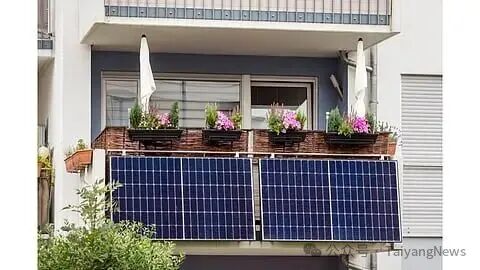
As part of an accelerated energy package launched in response to escalating tensions in the Middle East, the UK government is moving at full speed ahead with the introduction of plug-and-play photovoltaics (also known as balcony photovoltaics) commitment. The UK Department for Energy Security and Net Zero (DESNZ) said it would ensure plug-and-play PV modules were on store shelves "within months. Earlier this month, Energy Secretary Ed Miliband said plug-and-play PV systems would be available in UK supermarkets to help households save on energy bills and expand access to solar energy for tenants and apartment owners. Now, the government says it is "moving forward" with the deployment of these systems, bringing them to market by working with retailers such as Lidl and Amazon, as well as manufacturers such as EcoFlow. The move is aimed at reducing the UK's dependence on the global fossil fuel market.
"The Iran War once again shows that our pursuit of clean energy is essential for energy security so that we can get rid of the shackles of fossil fuel markets that we cannot control," Miliband said. "Whether it's by putting solar modules on new homes as standard or allowing people to buy plug-and-play photovoltaics in stores, we are determined to roll out clean energy to give our country energy sovereignty." The Department for Energy Security and Net Zero said it would work with the Energy Networks Association, Distribution Network Operators (DNOs) and regulator Ofgem to update the G98 distribution regulation and the BS 7671 cabling standard. This will allow UK homes to connect plug-and-play solar modules below 800 W (<800W) directly to a household power outlet without the need for electricians and with tailor-made safety standards.
In addition, the government also announced the implementation of the Future Homes Standard, under which new homes will be mandatory to install solar modules and low-carbon heating systems. The government estimates that "common sense measures" under the standard could save households up to £ 830 a year on their energy bills. Greg Jackson, founder and CEO of Octopus Energy, welcomed the initiatives, noting that interest in solar energy has soared by 50% since the outbreak of the conflict in the Middle East.
In addition, the government has instructed energy companies to provide customers with discounts on electricity bills on windy days, instead of directly shutting down wind turbines (abandoning wind) as is currently the practice. The initiative will first be introduced as an "innovation trial" in Scotland and the east of England, with a trial period from 1 April 2026 to 30 June 2026.