On April 1, the export tax rebate of China's photovoltaic industry officially returned to zero. Before the policy was implemented, the market's reaction was not unfamiliar: some people judged that prices were about to rise, some stepped up shipments to grab the window period, and some chose to wait and see, waiting for the market to become clearer.
After the policy was implemented, price fluctuations became the norm. Today, many practitioners are beginning to consider how to provide real certainty for investment and establish a stable income structure in the midst of fluctuations. In this regard, Jingao gives its own solution.
From price-oriented to value-oriented
The essence of photovoltaic investment is to exchange one-time costs for 20-30 years of power generation income. Therefore, it is never the price that really determines the success or failure of the investment, but the certainty of the return: the long-term power generation performance of the component. The Wood Mackenzie report shows that considering the life cycle of distributed photovoltaic projects is more than 20 years, the uncertainty of its long-term return is still a major concern for investors. Therefore, products that can provide 25-30 years of stable power generation guarantee are undoubtedly the top priority of the market.
In line with the first principles of the photovoltaic industry, to measure the long-term return of a product, you need to refer to the conversion efficiency of the component, the price, and even some minor innovations-such as the decay rate, the performance of the component in extreme conditions, the high credit of the company and the excellent performance of the product history. These variables, unaffected by short-term price fluctuations, are amplified over a 1/4-century life cycle, affecting returns.
hedging market uncertainty with technical certainty
jingao technology's choice is not to take short-term price as the only guide, but to continuously invest in technology and reliability construction, closely binding product performance with long-term benefits. In a volatile market environment, this ability itself constitutes a scarcity value.
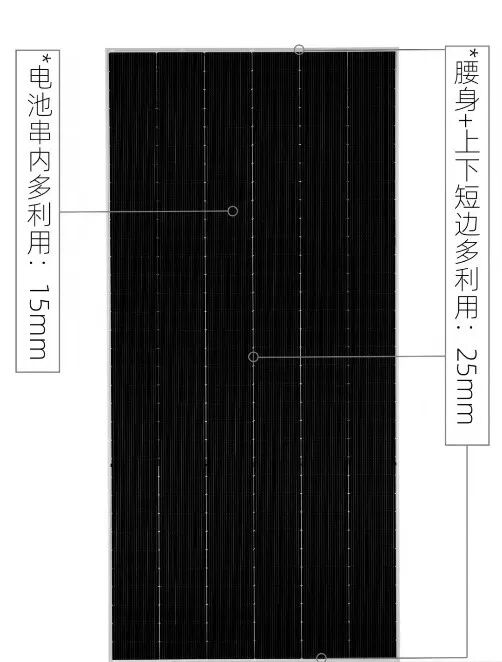
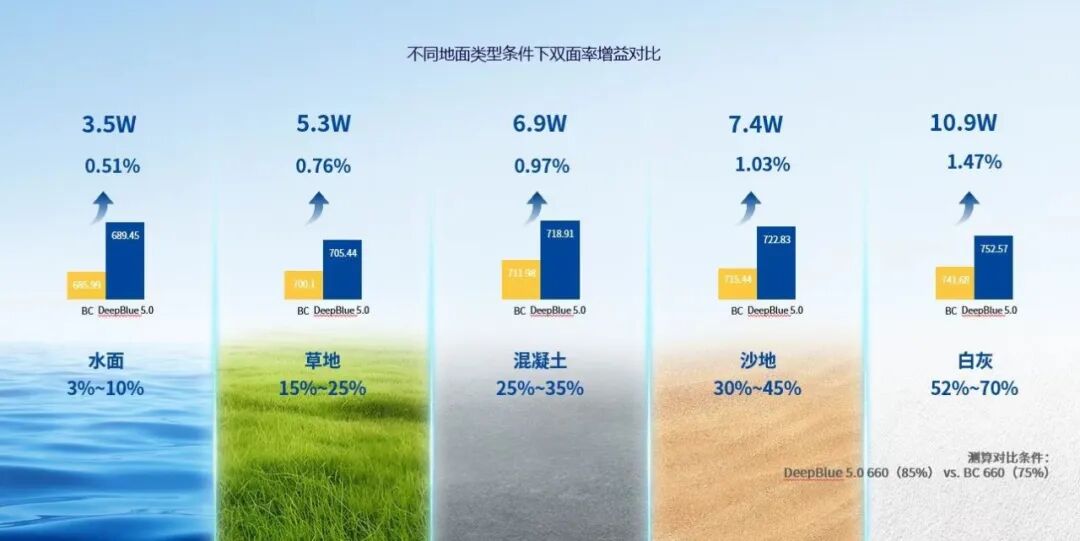
If one word is used to summarize the current procurement myth, it may be" cost-effective ". For a long time in the past, the price/performance ratio was reduced to the ratio of the initial price to the paper parameters, but using a single efficiency figure to measure a 20-30 year investment is itself an irrational investment model.
For the photovoltaic industry, price fluctuations may be inevitable, but the procurement logic can be redefined. From focusing on initial cost, to focusing on full life-cycle value; from comparing parameters, to measuring revenue certainty; from purchasing equipment, to allocating assets-this is not only a change in approach, but also a cognitive upgrade. In a volatile market, what is really scarce is never a lower price, but a verifiable long-term gain.
And this, perhaps is the photovoltaic procurement, is also a long-term investors, should return to the answer.