Market Position and Global Presence
Solar Water PV is the world’s first GW-scale provider of floating photovoltaic systems. By the end of 2025, it will have deployed over 340 projects worldwide, spanning more than 30 countries and regions across Asia, Europe, Africa, the Americas, and Oceania. The company has local delivery capabilities in 11 countries across Southeast Asia, South Asia, Europe, and the Americas. Its products are certified by multiple international authorities, including TÜV, WARS, and DNV, and have earned the trust of global customers thanks to their outstanding reliability and adaptability.
Core Technological Capabilities
The company has assembled a multidisciplinary R&D team, with technical service personnel accounting for over 40% of the workforce and those holding master’s degrees or higher comprising more than 50%. The team’s expertise spans offshore engineering, polymer materials, mechanical analysis, blow-molding processes, and other related fields. As of December 2025, more than 300 patent applications have been filed domestically and internationally, establishing a robust intellectual property portfolio centered on key areas such as floating-body materials, structural design, mooring systems, and offshore photovoltaics. In terms of materials innovation, Sunshine Water-Surface PV has independently developed a high-performance floating material featuring an outer layer of high-density polyethylene and an inner composite structure. This material combines high strength, excellent impact resistance, and superior weatherability. In 2025, the company filed a patent application for “Anti-biofouling Materials, Their Preparation Methods, and Anti-biofouling Floating Structures,” effectively addressing the challenge of biofouling. Anchoring technology is the cornerstone of safety for floating photovoltaic systems. In 2021, Sungrow Waterborne PV took the lead in developing the world’s first standard for floating photovoltaic anchoring systems. Its anchoring design methodology was certified by DNV, making Sungrow Waterborne PV the first company globally to receive such certification. In 2023, Sungrow Waterborne PV again assumed the lead in initiating an IEC international standard. To address challenging environments such as deep water, strong winds and waves, and complex seabed geology, the company validates system reliability through a multi-faceted approach that includes fluid–structure interaction simulations, hydrodynamic analysis, wave tank testing, and salt spray corrosion testing.
Core Products and Solutions
Solar Floating PV offers end-to-end floating photovoltaic system solutions for diverse environments, including inland lakes, reservoirs, hydropower station reservoirs, coal-mining subsidence areas, extremely cold regions, typhoon-prone areas, and nearshore waters. The floating-body products feature a modular design, are compatible with mainstream photovoltaic modules, and are easy to install. Their designed service life exceeds 25 years. The anchoring system is custom-designed to suit water depth, geological conditions, and hydrological factors, incorporating methods such as seabed anchors and other configurations, to ensure the long-term safety and stability of the power station.
For offshore photovoltaic systems, the company has developed proprietary technologies such as highly corrosion-resistant floats, wind-and-wave-resistant mooring systems, and anti-biofouling coatings, which can be deployed in intertidal zones, tidal flats, nearshore waters, and deep-sea environments. When integrated with an intelligent monitoring system, it enables real-time surveillance of the floating structure’s condition, mooring tension, and environmental parameters, thereby enhancing power plant operation and maintenance efficiency.
Flagship Projects
Solar Floating PV has developed a series of benchmark projects worldwide, demonstrating the broad applicability of its technology. Anhui Huainan 150MW Floating Solar Power Plant: Commissioned in 2017, it was then the world’s largest floating photovoltaic power plant. Located in a coal-mining subsidence area, the project delivers dual benefits by integrating land remediation with clean energy generation.
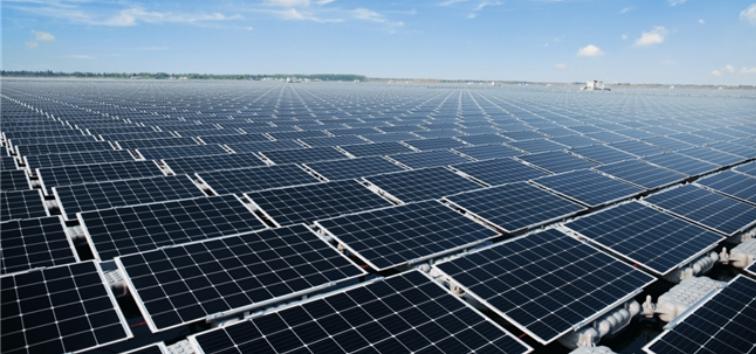
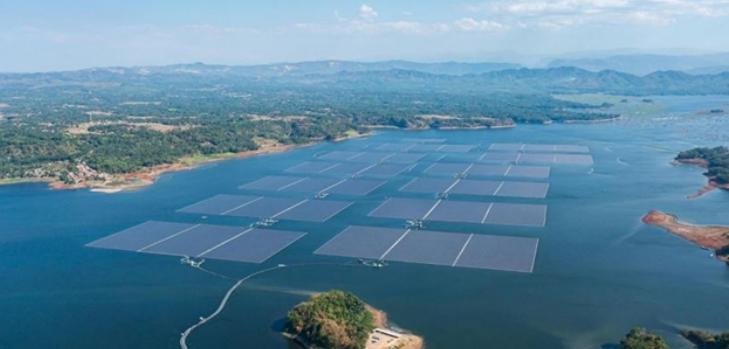
Indonesia’s 192MW Floating Hydropower Project: Commissioned in 2023, this is a key clean energy project in Southeast Asia. Located in waters more than 100 meters deep, it successfully overcame technical challenges in deep-water anchoring, setting a benchmark for deep-water floating power plants.
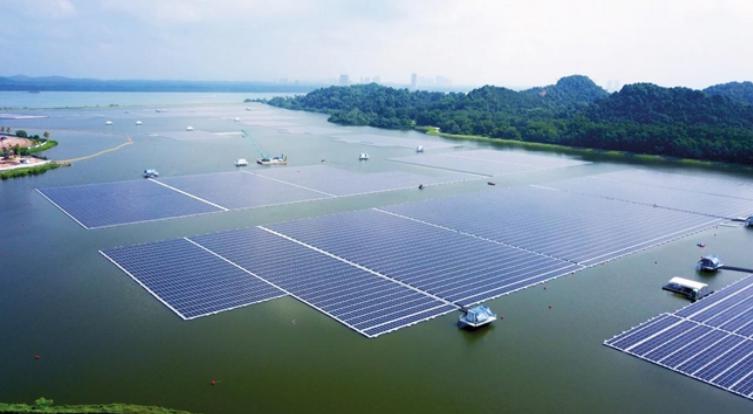
Anhui Huainan 396MW Project: Construction is scheduled to begin in 2025, with a total investment of approximately RMB 1.288 billion. This project will serve as a key clean energy base in the East China region. Singapore 60MW Project: Commissioned in 2021, this project is located on the Tengeh Reservoir in Singapore. It generates clean electricity while reducing water surface evaporation, thereby helping to protect Singapore’s valuable drinking water resources.
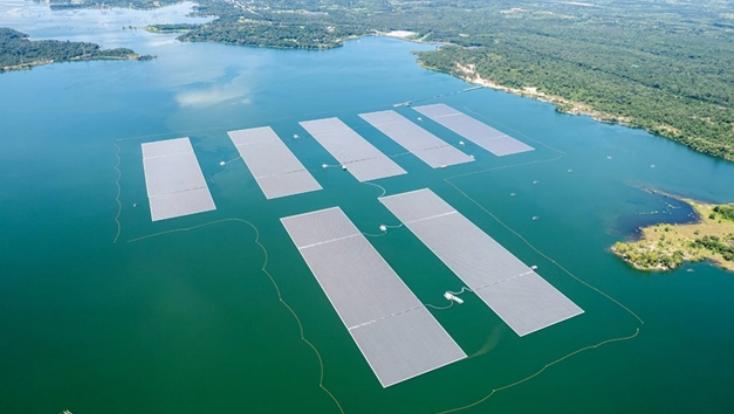
Thailand 58.5MW Project: Commissioned in 2021, this project is located on the reservoir of the Sirindhorn Dam Hydropower Station in Thailand. It combines photovoltaic power generation with hydropower, allowing for flexible adjustment of the proportion of hydropower and solar power based on electricity demand to ensure long-term, stable power supply.
The 50.5MW project in Ordos, Inner Mongolia: commissioned in 2024. With local minimum temperatures below -20°C and thick ice cover on the water surface, it is one of the quintessential examples of a project located in an extremely cold region. Shandong Weifang 29.3MW Project: Scheduled to come online in 2025, the project is located on an offshore salt-pan site. The water source is pure seawater, which effectively addresses the challenge of salt-spray corrosion. Malaysia 13MW Project: Commissioned in 2019, the project is located in waters with acidic water quality, with a pH of approximately 3. Sunshine Water Photovoltaic provided a one-stop floating PV system solution tailored to the project, including customized modules, array layout, and anchoring design, effectively addressing the challenges posed by the special water conditions.
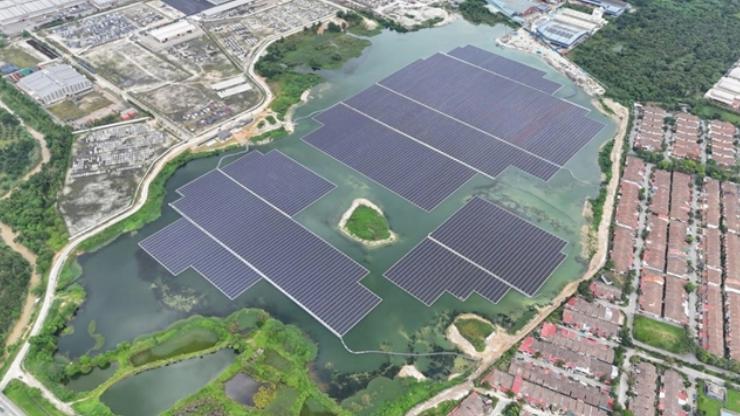
Philippines 5MW Project: Located on a lake created by mining activities, this project has successfully withstood severe typhoons and serves as a prime example of photovoltaic installations in typhoon-prone areas. Projects in India, Bangladesh, Japan, Chile, Peru, France, Turkey, South Africa, Ghana, Australia, and other countries: Our products are adapted to diverse climatic and aquatic conditions, and we have accumulated extensive project experience across more than 30 countries and regions worldwide.
Sustainable Development and Ecological Conservation
Yangguang Shuimian Photovoltaic consistently upholds green and environmentally friendly principles. The floating body is made of food-grade high-density polyethylene, which is 100% recyclable and does not pollute water bodies. The company actively engages in biodiversity research, collaborating with scientific institutions to assess the impact of floating solar power plants on aquatic ecosystems and to optimize plant design in order to promote ecological balance. In the “fishing-solar coexistence” model, power generation is carried out on the water surface while aquaculture takes place beneath it, thereby enhancing the overall economic and ecological benefits of the water area.
Future Outlook
Looking ahead, Sunshine Floating PV will continue to focus on eco-friendly, reliable, and highly efficient floating photovoltaic systems, offering high-return, one-stop services. The company aims to spearhead the sustainable development of floating PV and is committed to becoming a global leader in this field.