Recently, the German renewable energy giant ENERTRAG announced that its Bertikow energy storage project in Brandenburg (Brandenburg) has officially obtained the local municipal license and entered the substantive construction phase. This project with installed capacity 200MW and energy storage capacity as high as 800MWh is regarded as a key patch for German power grid to deal with energy fluctuation not only because of its huge scale, but also because of its positioning of "4-hour long energy storage .
Brandenburg has always been a gathering place for wind power and photovoltaics in Germany, but for a long time, the local power grid has faced a problem of abandoning light and electricity: when windy weather strikes, excess electricity is often wasted because of the limited carrying capacity of the power grid.
This approved Bertikow project is to solve this problem. Different from the common short-term energy storage of 1-2 hours in the past, the project adopts the design scheme of 4-hour energy storage .
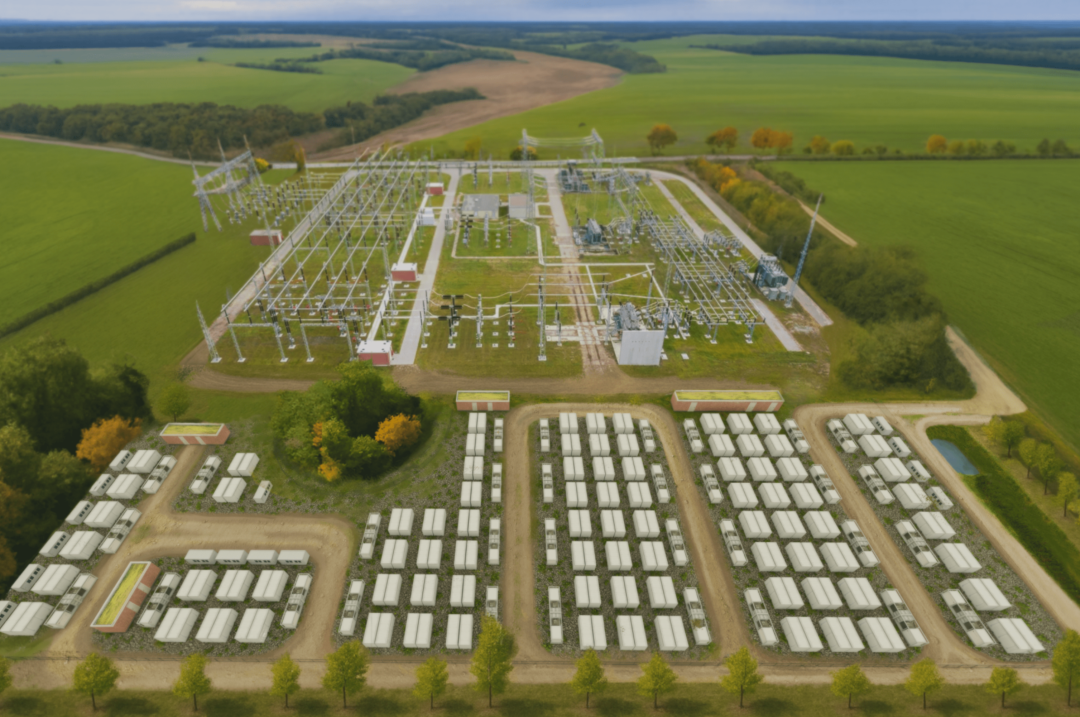
Not long ago in November, ENERTRAG and German power grid operator 50Hertz jointly announced the completion of the modernization of the local Bertikow substation. This two-year project is essentially to repair the highway connected to the backbone network in advance for the 800MWh energy storage project.
With the recent Uckerfelde municipal agreement, the final administrative hurdles to the project have been cleared. According to the official plan, the project is expected to be officially put into operation in the third quarter of 2027 . At that time, it will not only provide arbitrage and peak shaving , but also have black start (Black Start) function.
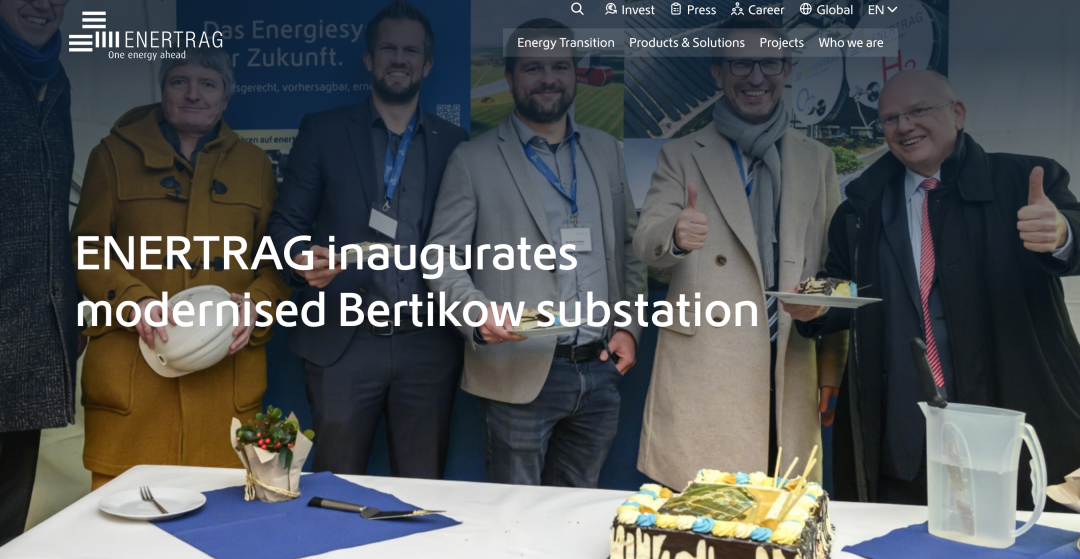
In fact, the progress of this project has not been smooth sailing. In the early stages, the project has encountered local residents' doubts about safety, environment and noise. However, ENERTRAG did not choose to force it forward, but chose to "start again" and continue to communicate with the town committee of Ukefeld through open document inquiry, multiple rounds of face-to-face discussion and transparent dialogue mechanism.
The "second communication" finally got a consensus. The local council voted in favor after fully assessing the risks and opportunities. This process not only allows the project to obtain a "construction pass", but also becomes a positive case of the relationship between local energy development and residents. ENERTRAG area manager Marc-Daniel Transfeld lamented: "We learned a lot from the feedback. True listening and open communication are the only keys to sustainable advancement of large-scale energy projects."
What is more exemplary is that the project also introduces the " Joint Power Plant Dividend Mechanism ". This means that the benefits generated by the energy storage system will directly benefit the local community, making residents not only bystanders but also beneficiaries of the energy transition. This development model with cooperation as the core and benefit sharing may be the best practice for the future global energy transformation.