"Last month, I was assessed again because the AGC availability rate did not meet the standard!"
With the soaring installed capacity of photovoltaics, the dispatching requirements of the power grid for new energy are becoming more and more strict. According to the "Regulations on the Management of Power Grid-connected Operation" and "Measures for the Management of Power Auxiliary Services" issued by the National Energy Administration, each region of the country has issued a highly practical "two detailed rules"-

then, what are these two detailed rules" testing "us?
first of all, we need to clarify the essential differences between the two" detailed rules.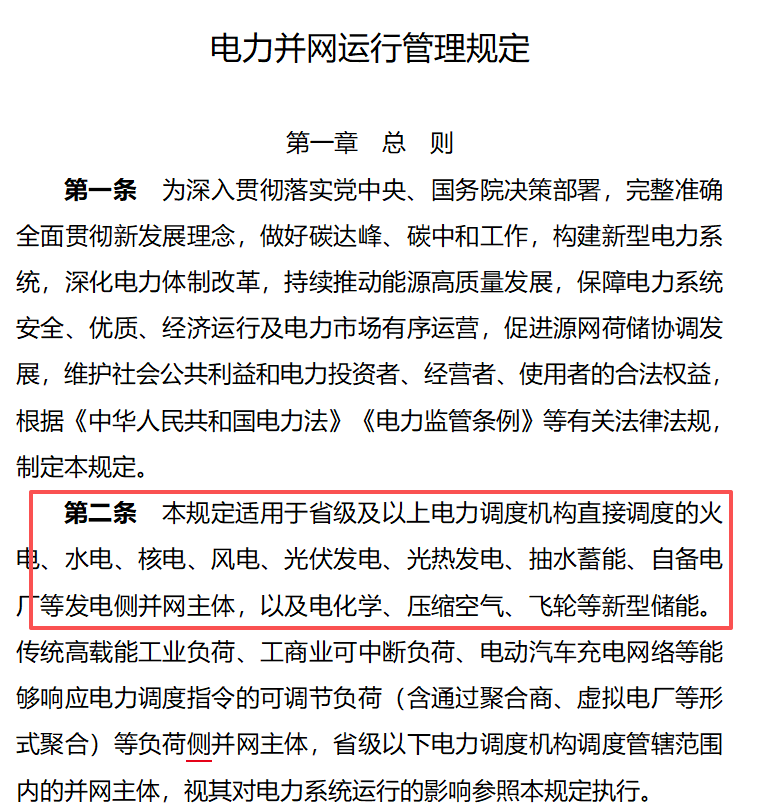
This rule is mainly used to regulate the requirements of grid-connected operation of photovoltaic power plants. If the power station does not obey the dispatching instructions, the equipment fails frequently, or fails to complete the work it should do, it will trigger the assessment and directly face economic punishment. The formulation of this rule is to ensure the safe and stable operation of the power station without affecting the normal operation of the power grid. It is equivalent to setting a bottom line for the operation of the power station.
The safe operation of the power grid is not enough to rely on each power station to manage itself. Sometimes the power station is required to provide additional auxiliary services, such as stabilizing the frequency and voltage of the power grid.
This rule will clearly state which services the power station must perform and which services can be paid accordingly. The more and higher quality paid services provided by the power station, the more economic compensation it will receive. Its role is to encourage power stations to contribute more to the grid, but also to increase their own income.
The assessment of photovoltaic power plants included in dispatching management by the power regulatory department mainly focuses on the following seven aspects. Each indicator corresponds to specific technical requirements and economic risks.
This is one of the most direct and severe assessment items. The assessment focuses on the number of unplanned outages of power stations or large-scale disnetworks caused by their own reasons.
Unplanned downtime is the most serious of all assessment items. Once unplanned downtime occurs, it will not only cause direct loss of power generation, but also generate high assessment costs . On this basis, the regulatory authorities will determine that the reliability of the power station is insufficient and there are problems in operation and maintenance management. This assessment focuses on the equipment maintenance level, emergency response capability and meticulous daily inspection of the operation and maintenance team.
according to the assessment rules in the western mongolia region, points will be deducted according to the installed capacity for fans to be taken off the grid. In northeast China, the "dynamic assessment" mechanism is adopted. the longer the downtime and the greater the scope of influence, the heavier the punishment will be. In actual operation and maintenance work, common problems such as inverter failure and junction box trip may trigger assessment if they cannot be handled in time. Therefore, the daily inspection must carefully check the health of the equipment.
the main assessment of three indicators:AGC system availability, active power change value scheduling control qualification rate, scheduling control response time.
The AGC system is the key equipment for the power dispatch center to remotely control the output of the power station. When the power grid issues a power adjustment command, the power station needs to accurately implement the power increase or reduction operation within the specified time.
The grid connection of photovoltaic power plants will disturb the grid voltage, so it is necessary to have the ability to dynamically adjust the voltage. Reactive power compensation device and AVC system is the key to realize this function.
what to consider: the availability rate of reactive power compensation devices (such as SVG); The monthly operation rate of automatic voltage control (AVC) system and the qualified rate of device regulation.
mainly examines whether the power station can respond to frequency changes automatically and quickly like thermal power units when there is a large disturbance in the frequency of the power grid, as well as the qualified rate of primary frequency modulation.
In the past, the FM task of the power system was mainly undertaken by traditional thermal power. With the increasing proportion of new energy installed capacity in the power grid, photovoltaic power plants have also begun to be included in the scope of FM responsibility.
is a necessary technical function of the power station. When the frequency of the power grid suddenly drops, the photovoltaic power station equipped with a primary frequency modulation function needs to quickly increase the active power output by invoking the reserved power generation reserve capacity or supporting energy storage system in a very short time from milliseconds to seconds, so as to maintain the stability of the power grid frequency.
The assessment of the primary frequency modulation capability of the power system focuses on the rapid autonomous response level of the power station without dispatching instructions. the primary frequency modulation assessment standard usually requires the qualified rate to reach 100, and the unqualified part will be assessed proportionally. At the same time, in some areas where the auxiliary service market is established, if the photovoltaic power station can exceed the FM task target, it can obtain the corresponding economic compensation income.
this assessment looks at the power factor adjustment ability of the power station under different output, and mainly examines whether the dynamic adjustable range and adjustment accuracy of the power factor of the power station at the merge point meet the standards.
The power factor reflects the actual utilization of electric energy. Power grid regulations, photovoltaic power plants in addition to stable output active power, but also in accordance with the scheduling instructions to adjust the power factor, in order to improve power quality.
Regarding the assessment of power factor, the focus is on the reactive power adjustment capability of the power station. It is generally required that the power factor of the power station can be adjusted continuously and smoothly within the range from the leading 0.95 to the lagging 0.95. This is a double test for power station equipment and operation strategy. On the one hand, the inverter needs to have sufficient reactive power regulation performance, on the other hand, it requires the whole station to establish a reasonable reactive power coordination control strategy.
If the inverter performance is not up to standard, or the control strategy is defective, it is difficult to complete the large-scale adjustment tasks specified in the scheduling instructions, and eventually points will be deducted for not meeting the assessment criteria.
It can be said that this is the most troublesome assessment item for operation and maintenance, with many details and strict standards.
mainly examines the maximum error of the daily prediction curve, the reconciliation and average accuracy of the ultra-short-term prediction curve, and the daily accuracy of the available electricity consumption.
The power grid needs to know in advance how much electricity you can generate tomorrow and in the next 15 minutes, so as to reasonably arrange the operation mode of the entire power grid. The more accurate your predictions are, the safer and more economical the grid will be. This is a direct test of the "intelligent" level of photovoltaic power plants.
The core purpose of the two detailed rules assessment is not simply to fine, but to promote photovoltaic power plants to better cooperate with the operation of the power grid. Paying attention to these assessment requirements in the daily operation and maintenance work can not only reduce the penalty, but also get subsidies through participating in the auxiliary services of the power grid, which is a real good thing for the operation of the power station.