Taiyuan Wusu Zero Carbon Airport is the first benchmark project in the domestic civil aviation field to carry out full-scale and full-process green and low-carbon construction of energy, buildings and facilities. With the goal of "zero carbon operation of the airport", it promotes the comprehensive green transformation of energy use. The overall planned installed capacity of the project is 108.5 MW , of which about 40 MW jingke energy flying tiger anti-glare module is specially deployed in light-sensitive areas such as both sides of the aircraft landing runway to escort aviation safety with science and technology and fully support the deployment goal of "fully equipped" photovoltaic at the airport.
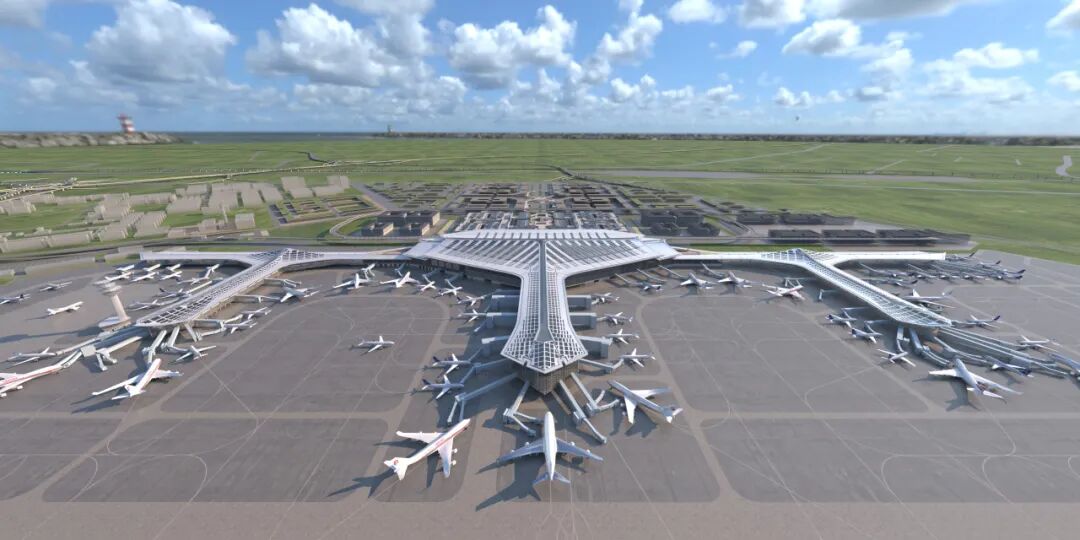
In the flight area, the reflected light control of photovoltaic modules is very important. Jingke Flying Tiger anti-glare component converts direct specular reflection into uniform and soft diffuse reflection light through special embossing technology on glass surface . Under the same illumination and incident angle, the brightness of reflected light is more than 60% lower than that of conventional component , significantly suppressing glare from the source and ensuring navigation visual safety. The product has passed the TÜV Rheinland ISO 9050:2003 standard test and a full set of reliability verification, supplemented by a 30-year power warranty, to meet the stringent requirements of the civil aviation system for safety and reliability, providing a solid guarantee for the long-term reliable operation of the project.
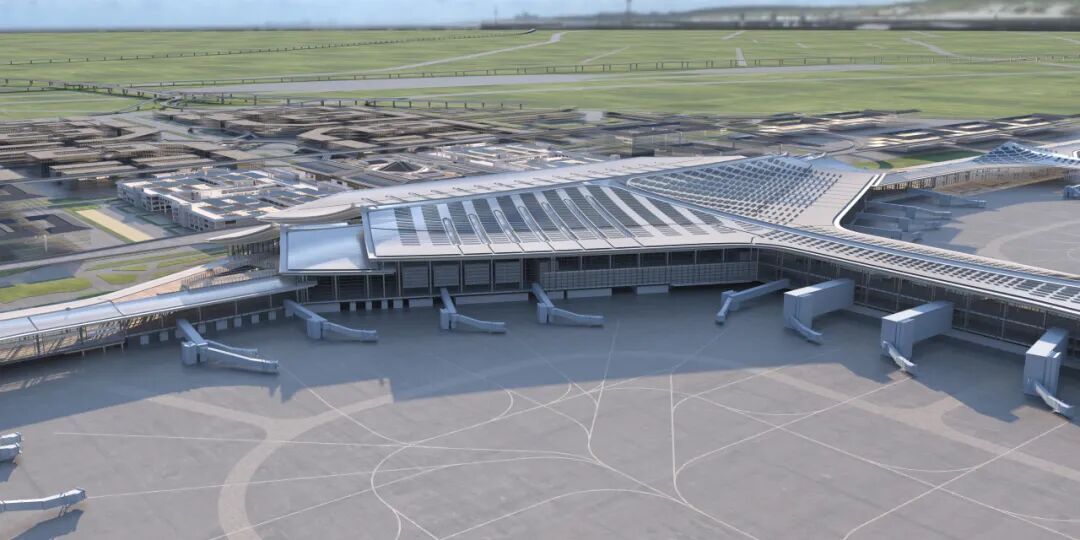
For the special airport environment, Jinko Flying Tiger components have excellent mechanical load and weather resistance . It can withstand the impact of airflow and jet wake caused by aircraft take-off and landing, adapt to the temperature difference change from -40 ℃ to 85 ℃, maintain structural stability and reliable operation under extreme weather such as rainstorm, blizzard and strong wind, and ensure long-term performance under continuous operation environment.

in terms of power generation capacity, the component is based on jingke n-type TOPCon technology, with high conversion efficiency, high double-sided rate and excellent weak light response performance, and maintains efficient power output under multi-angle and non-uniform lighting conditions on the airport roof. At the same time, its high double-sided rate feature further enhances the power generation potential in scenarios such as runway perimeter and ground idle areas, significantly improving space utilization efficiency and power generation revenue while taking into account the airport's spatial structure and aesthetic needs.
the overall project is based on the comprehensive utilization and innovative technologies of renewable energy such as photovoltaic, medium-deep geothermal, cross-seasonal cold and heat storage, vehicle-network interaction, and supported by multi-form energy storage, direct and flexible building light storage, efficient consumption of green electricity, and smart energy management. it is expected that when fully completed, the average annual power generation will reach 0.12 billion kilowatt-hours, reducing carbon dioxide emissions by about 120000 tons per year, equivalent to 6.57 million trees, increasing the forest area by 78.8 million square meters will significantly reduce the carbon emissions of airport operations and become a replicable and replicable example of the green transformation of the civil aviation system. JinkoSolar will also continue to use efficient, safe and scenario-based photovoltaic solutions to help more transportation hubs and public facilities achieve green and low-carbon upgrades and jointly promote a zero-carbon future.