Recently, the Central Electronics Company (CEL), a state-owned enterprise under the Ministry of Science and Technology of India, officially launched a major tender to build a 1.2GW photovoltaic module production line in the Sahibad plant. The project is an important part of India's "Make in India" program, using a revenue-sharing model to build a fully automated advanced production line compatible with single crystal PERC and TOPCon technology, with the aim of further expanding local photovoltaic manufacturing capacity and helping to upgrade renewable energy technology.
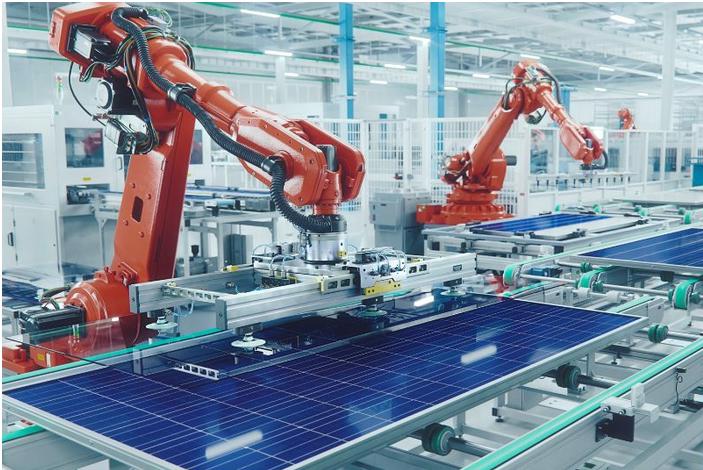
According to the bidding plan, CEL will provide core support for the project: first, allocate about 21000 square meters of land for production line construction; Second, provide up to 0.25 billion Indian rupees, it is specially used for the construction of production plant and the relocation and transformation of the roof of the existing 900KW ground photovoltaic power station. The winning bidder shall bear the main responsibility for the operation of the project, including the provision of all equipment, utilities and manpower required for the operation of the plant, and shall be responsible for the operation and maintenance of the initial 6 years. If the standard is met, the cooperation period can be extended for another 3 years.
the revenue sharing and cooperation constraints are clear: the winning bidder shall pay CEL an annual fee of not less than 0.15 billion Indian rupees in the first year, and the annual fee for the following 5 years shall be increased to 0.18 billion Indian rupees, which is directly decoupled from the project revenue; At the same time, all products of the production line shall be sold exclusively through CEL, which shall be responsible for terminal invoicing and retaining the agreed proportion of revenue share.
This tender sets a strict entry threshold and is only for local Indian enterprises. The intended enterprises must meet two core conditions: the average annual turnover in the past three years is not less than 0.75 billion Indian rupees, and the net assets as of March 31, 2025 are not less than 0.5 billion Indian rupees. The tender will be based on a two-envelope system and will culminate in a live forward auction through the National Information Centre (NIC) portal. The bidder is required to pay a bid bond of 5 million Indian rupees by NEFT or RTGS (no exemption clause), and the winning bidder is required to provide an additional performance bank guarantee or bond of 0.25 billion Indian rupees when signing the contract.
the key time nodes of the project have been fully defined: the invitation to bid (RFP) will be issued at 15:30 on December 26, 2025 (India standard time); A pre-bid meeting will be held at 11:00 on January 5, 2026 (Indian standard time); January 15, 2026, 10:00 (Indian standard time) is the deadline for the sale/download of tender documents and the submission of tender documents; January 16, 2026, 10:00 (Indian standard time) to open the technical bid review, the opening time of the commercial bid will be notified after the completion of the technical review. CEL specifically recommends that bidders visit the plant site in advance and all bid documents should be submitted online through the Indian government e-bidding platform.
Industry insiders pointed out that the current non-fossil fuel power generation installed in India has accounted for more than 50%, and the relevant targets of the Paris Agreement have been achieved ahead of schedule. Solar energy as the core renewable energy is developing rapidly, but the local photovoltaic industry chain There are still shortcomings and high dependence on imports. The CEL PV module production line bidding will not only improve the revenue sharing cooperation model under the "Made in India" framework, but also strengthen the local PV core production capacity and provide support for India to achieve the target of 0.5 billion kilowatts of non-fossil energy installed capacity by 2030.