Scientists from the National University of Singapore recently announced that they have successfully fabricated perovskite-silicon tandem solar cells with high efficiency and long-term thermal stability on industrial-grade suede silicon wafers through a vapor deposition process. This breakthrough addresses a core barrier to commercial deployment of the technology.
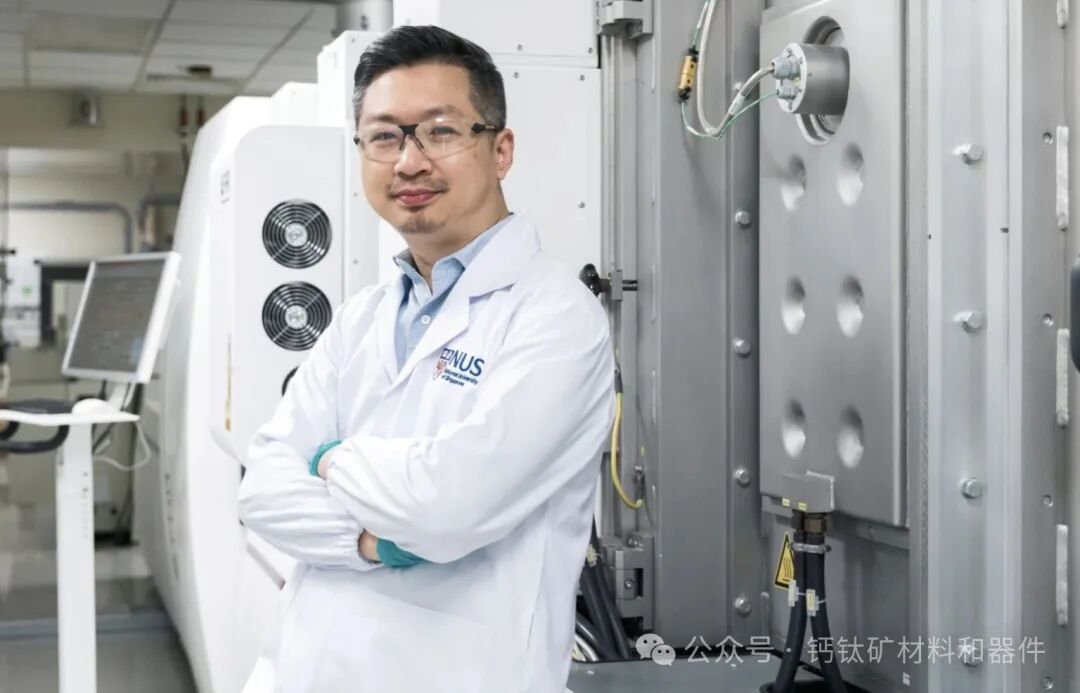
The study was led by Dr. Yi Hou, Assistant Professor in the Department of Chemical and Biomolecular Engineering at the National University of Singapore and Director of the Perovskite-Quito-junction Solar Cell Research Group at the Singapore Solar Energy Institute (SERIS). The innovative vapor deposition process developed by his team has, for the first time, successfully integrated a high-quality perovskite layer uniformly onto an industrial silicon wafer with a micron-sized textured structure-the exact same structure used in current commercial solar cell production.
Previously, although vapor deposition was regarded as a production route compatible with existing industries, it was always difficult to prepare a stable perovskite layer on the steep "pyramid" suede structure of industrial silicon wafers. The Singapore team successfully solved this problem by designing a special surface-binding molecule. The molecule can promote the equilibrium adsorption of the perovskite precursor compound during the vapor deposition process, thereby achieving uniform film formation and significantly improving the resistance of the device to high temperatures.
The research team claims that the laminated battery manufactured based on this technology achieves a power conversion efficiency of more than 30% and exhibits excellent long-term operating stability. In the standard industry stress test (85 degrees Celsius, one sun light intensity), the T90 life of the battery (the time required for performance to decay to 90% of the initial value) exceeded 1400 hours, and the overall stable operation time exceeded 2000 hours. The durability demonstrated makes it one of the most stable perovskite-silicon laminated cells ever reported, demonstrating its potential for rooftop, large power station and industrial solar applications.
Dr. Hou Yi said: "The key innovation of our work is the first successful demonstration of the conformal integration of high-quality vapor-deposited perovskite layers with industrial micron suede silicon wafers. This makes the device have both high efficiency and unprecedented thermal stability and operational stability, which significantly pushes this technology to practical applications."
The researchers point out that the next step will focus on scaling up this laboratory-scale process to large-area components and integrating the vapor deposition method into the pilot production line, which is a step that must be taken before commercialization. Dr. Hou Yi added: "At the same time, we are developing next-generation perovskite material components and interface designs optimized for manufacturability, aiming to achieve reliable and large-scale production of perovskite-silicon stacked solar cells."
It is worth noting that in June this year, researchers at the Singapore Solar Energy Research Institute reported that perovskite-organic laminated solar cells achieved a world record of certified efficiency of 26.4 percent, and reached 26.7 percent on larger test devices, setting the highest performance of the technology to date. This breakthrough in the stability of a new generation of laminated batteries further strengthens the team's leading position in this field.
Reference source: www.pv-magazine.com