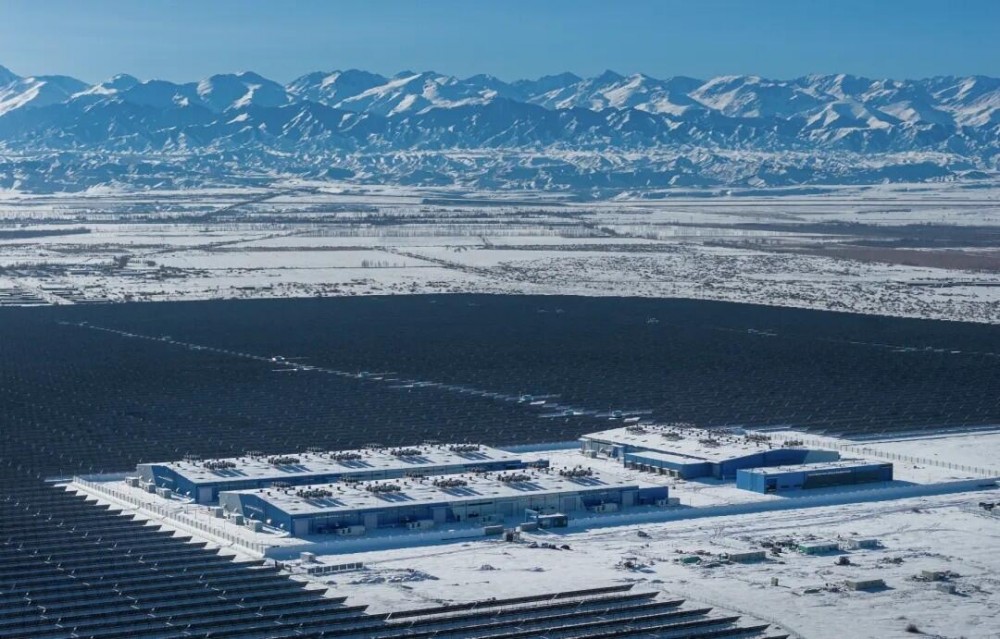
▲ The Three Gorges Group’s Jimunisar All-Vanadium Flow Battery Energy Storage Power Station in Xinjiang Photo credit: Lin Taihong and Wu Guohang
Located in Jimunisar County, Changji Prefecture, Xinjiang Uygur Autonomous Region, the power station has a rated capacity of 200 MW and an energy storage capacity of 1 GWh. It is currently the largest all-vanadium flow battery energy storage facility in operation in China. During the day, when solar panels receive the most sunlight and operate at peak efficiency, the power station can store excess electricity that the grid cannot immediately absorb, to be discharged at night or during periods of high demand. It is expected to increase the utilization rate of the project’s supporting photovoltaic power plant by more than 10% annually, with a potential to generate an additional over 230 million kilowatt-hours of clean electricity.
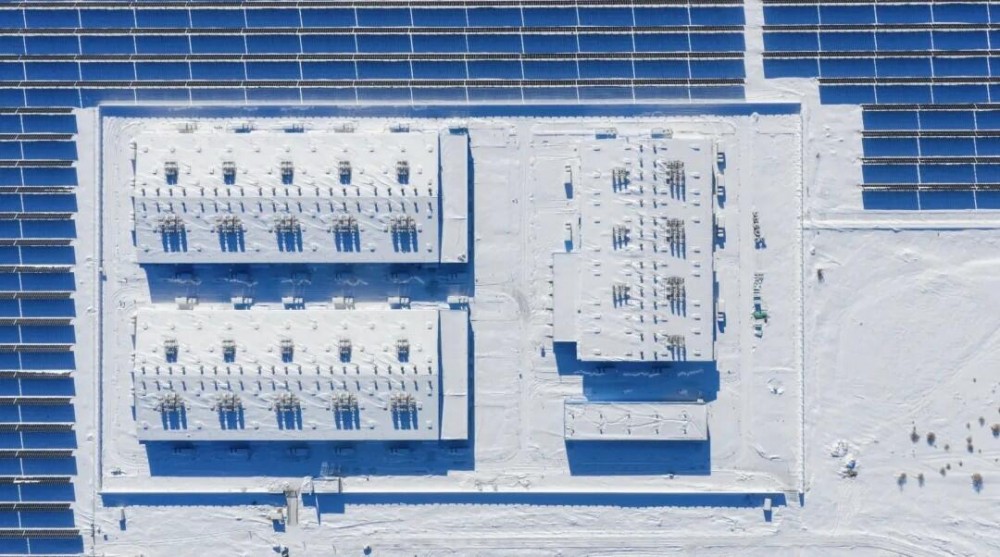
▲ The main building of the Three Gorges Group’s Xinjiang Jimunisar all-vanadium redox flow energy storage power station
As one of the most promising long-duration energy storage technologies today, the all-vanadium redox flow battery stores and releases energy by driving chemical reactions between vanadium ions in different oxidation states. The underlying principle is akin to “bottling electricity in a liquid.” Deng Fubin, project manager of the Jimsar all-vanadium redox flow battery–photovoltaic storage integrated project at China Three Gorges Corporation’s Xinjiang branch, explained that the power station comprises energy-storage units, energy-conversion units, and a power system. During charging, electrical energy drives the redox reactions of vanadium ions, storing energy in chemical form within the electrolyte. During discharging, the process reverses: the stored chemical energy is converted back into electricity and delivered to the grid in a stable manner. The entire cycle is highly efficient and readily controllable. “All-vanadium redox flow battery technology boasts a long cycle life, high safety, and strong scalability, making it particularly well suited for large-scale, long-duration energy storage applications.” Deng Fubin stated. The power station is located on a Gobi desert area that experiences extreme temperatures ranging from −30°C to +40°C. To ensure stable operation under such severe temperature fluctuations, China Three Gorges Corporation pioneered a fully indoor layout using color-steel panel buildings, significantly improving the operating and maintenance environment.
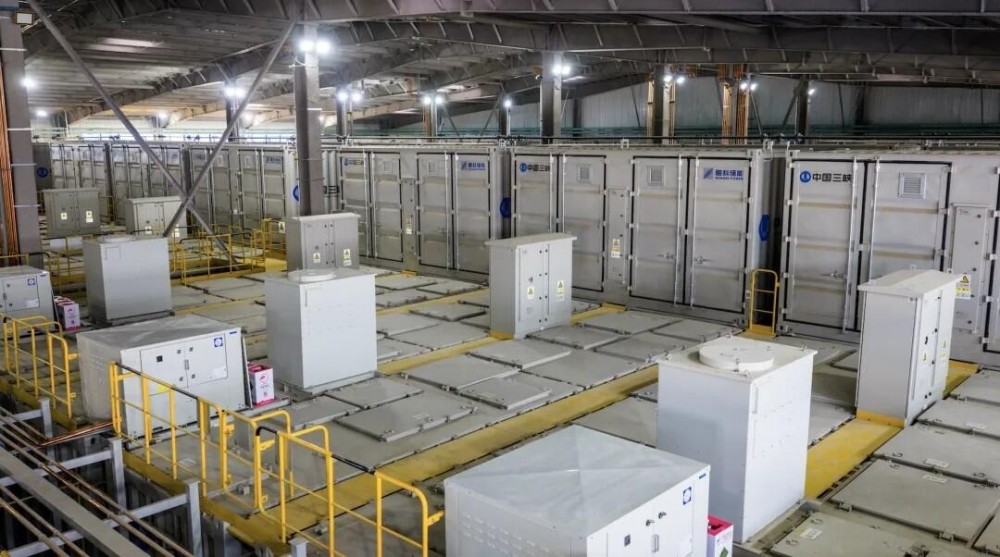
▲The power station pioneered an all-indoor layout using color-steel prefabricated buildings, effectively overcoming challenges such as shutdowns during severe winter cold, extreme summer heat, and windy, dusty conditions.
“For the first time in China, we have adopted a steel-framed building to house the energy storage equipment indoors. By leveraging the building’s temperature-control system and the equipment’s built-in thermal management system, we have successfully addressed issues like shutdowns caused by harsh winter temperatures, scorching summer heat, and strong winds carrying sand and dust.” Ma Zongren, the project manager for the Jimunisar project at the Three Gorges New Energy Construction Management Branch, stated.
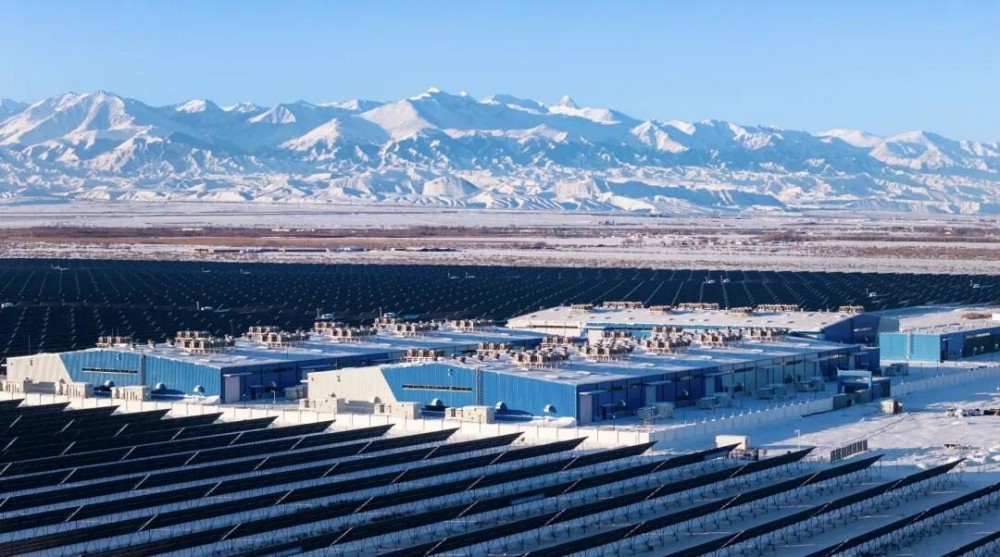
▲ Three Gorges Group’s Jimsar All-Vanadium Flow Battery Energy Storage Power Station in Xinjiang
Xinjiang is one of China’s most important new energy hubs. However, the region’s wind and solar resources are generally located far from load centers, meaning that large-scale integration of renewable energy into the grid requires robust grid-balancing capabilities. Once commissioned, the project will provide multiple functions for the regional power grid, including peak-shaving and valley-filling, reserve capacity adjustment, and emergency power supply, thereby offering robust support for building a secure and stable new energy system. Data show that China is the world’s largest holder of vanadium resources, with 72% of global vanadium product capacity, placing it first globally. Leveraging domestically developed, proprietary all-vanadium redox flow battery technology, the power station has effectively spurred the growth of the entire value chain, including the manufacturing of critical equipment, system integration, and material supply. This has further translated China’s abundant vanadium ore resources into industrial advantages, providing a replicable model for the nationwide deployment of long-duration energy storage technologies.