Guangdong’s 200MW PV Project Officially Breaks Ground
On December 16, the 200MW photovoltaic project for the Xiqiao Zero-Carbon Industrial Park (Taiping Area) in Foshan, Guangdong, commenced construction.
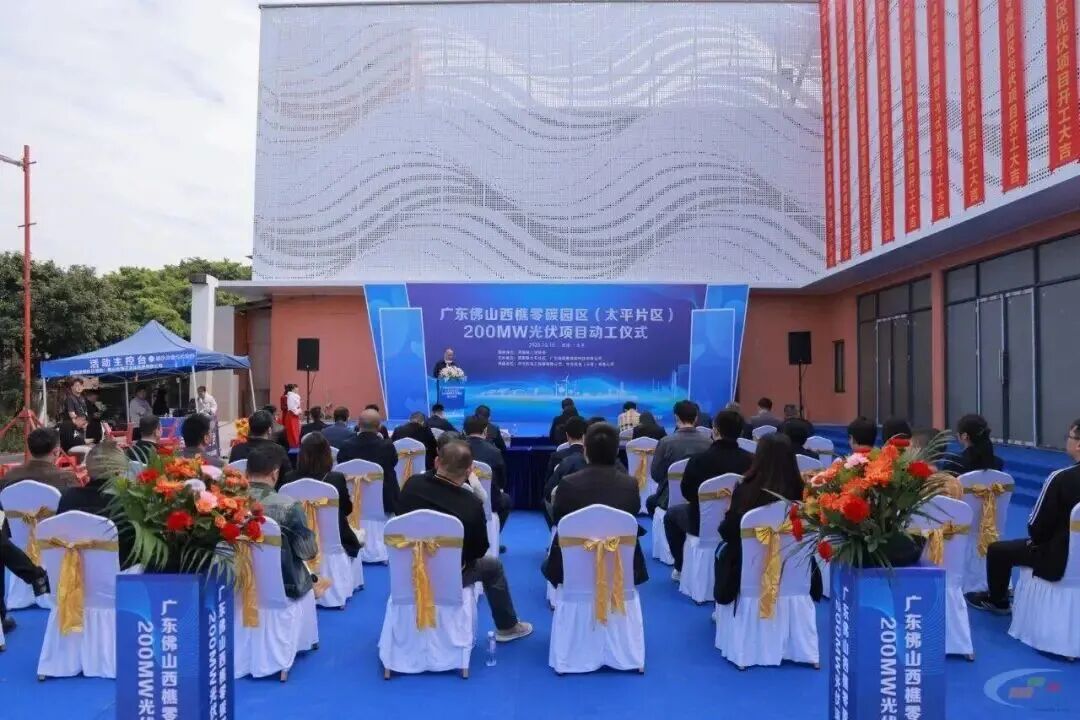
The project is located in the Danjia Cultural Research and Innovation Park on Fudan Road, Xiqiao Town, Foshan, Guangdong Province. It is jointly promoted by the Taiping Community of Xiqiao Town, Guangdong Xingyao Lvyun Technology Co., Ltd., and CCCC Mechanical & Electrical (Yunnan) Co., Ltd. Adopting a distributed photovoltaic power generation model, the project makes full use of idle rooftop resources within the park and its surrounding areas to establish an efficient energy system characterized by “local power generation and local consumption.” Future projects will also integrate energy storage systems with smart energy management technologies to establish a low-carbon, intelligent operations framework.
China National Nuclear Corporation Huineng’s 100MW PV Project Breaks Ground
On December 25, the China National Nuclear Corporation Huineng Tongnan Xiaodu South 100 MW photovoltaic power generation project officially commenced construction.
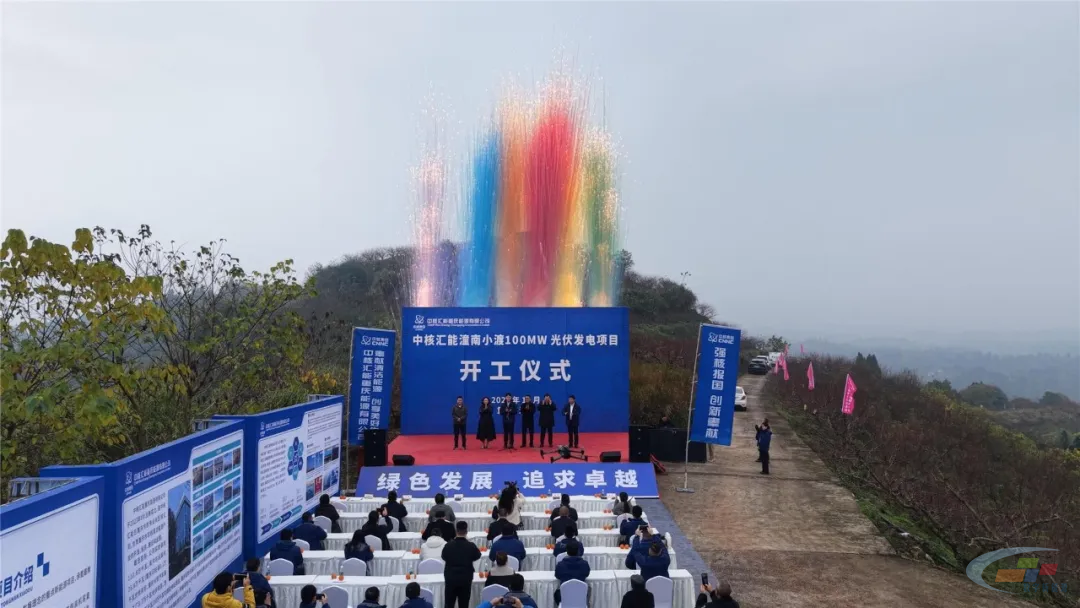
According to available information, this is a new project with a total investment of approximately RMB 334.22 million. The construction site is located in Tangba Town, Xiaodu Town, Xinsheng Town, Wofotown, Taian Town, and Shouqiao Town in Tongnan District, Chongqing Municipality. The project developer is China Nuclear Huineng Chongqing Energy Co., Ltd. The project is planned to have a DC-side capacity of 134.92556MW and an AC-side capacity of 100 MW, and it is intended to use 710Wp monocrystalline bifacial PV modules. The main construction components of the project include the main works, auxiliary works, environmental protection works, and temporary works. The main works comprise 350 string inverters rated at 320kW each, 20 string inverters rated at 300kW each, one 110kV step-up substation, 35kV collector lines, as well as on-site roads and other associated facilities. The project’s total construction period is approximately 12 months, with a 25-year production and operation phase.
The 100MW photovoltaic project in Gansu Province has officially commenced construction.
On December 27, the Jianrong Xipo PV power generation project in Gansu Province officially broke ground.
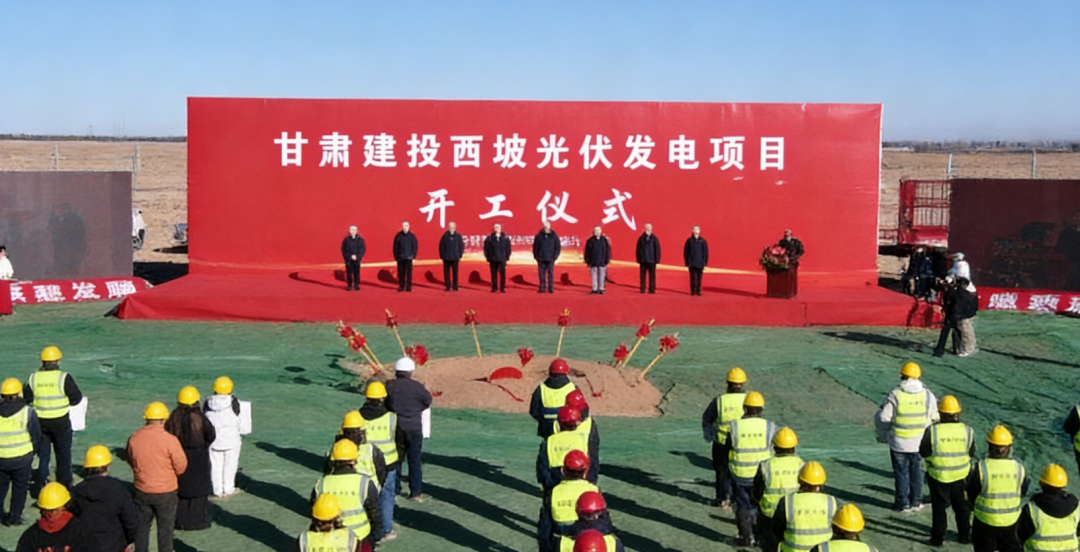
According to available information, this is a greenfield project located in the Xipo Photovoltaic Park in Jinchuan District, Jinchang City, Gansu Province. It is being invested in and constructed by Gansu Jianrong Technology Development Co., Ltd., with a total investment of RMB 360 million. The project is planned to have a total installed capacity of 100 MW. The main construction components include photovoltaic arrays, a 35kV collection transmission line, a 15 MW/60 MWh energy storage power station, roads, and other supporting facilities.
In addition, according to the person in charge of the No. 2 Company of China Railway 18th Bureau, which is undertaking the project construction, the project plans to use 745Wp high-power PV modules and deploy 30 PV arrays across a 2,280-acre desert and gobi area. Preliminary estimates indicate that this approach could reduce overall construction costs—covering racking systems, cables, foundations, and other components—by approximately 3.4% proportionally.
In addition, the project is expected to achieve full-capacity grid connection and begin power generation in December 2026.