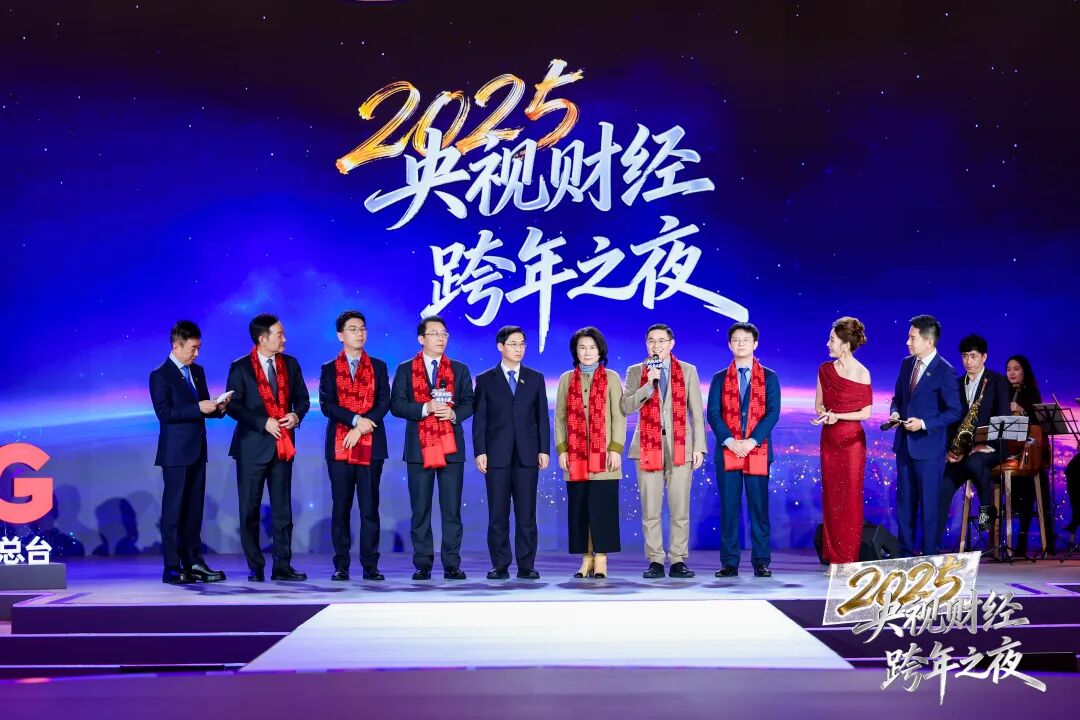
That evening, Zhong Baoshen joined Feng Xingya, Chairman of GAC Group; Dong Mingzhu, Chairwoman of Gree Electric Appliances; Xu Li, Chairman and CEO of SenseTime; Qin Yinglin, Chairman of Muyuan Foods; and Wang He, founder and CTO of Galaxy Unmanned Robotics, on stage for a panel discussion titled “The Next Stop: 2026.” Over the past two decades, the photovoltaic industry has experienced rapid technological advancements and sustained demand growth, prompting continuous capacity expansion by manufacturers. At the same time, a wave of new entrants has flooded the market, resulting in a severe supply-demand imbalance. Faced with unprecedentedly fierce competition in the PV industry and a widespread loss-making situation across the sector, Zhong Baoshen used a recent viral internet meme to describe the situation: “In the face of the sweeping tides of green transition and carbon neutrality, we should have been proceeding calmly and with ease; instead, we’re rushing around frantically, scrambling just to keep our heads above water.” It is a bittersweet irony: photovoltaics can drive the global energy transition, yet they cannot resolve their own developmental challenges. It is much like a physician who cannot heal himself—holding pure spring water in hand yet parched on the journey. However, Zhong Baoshen quickly conveyed a firm conviction: the industry’s downturn is not the end, but rather a “sifting process that separates the wheat from the chaff” and an “opportunity for breakthrough and rebirth.” At this pivotal moment for the PV industry, the most critical task is to break the deadlock—to identify the right direction and overcome existing constraints. First, we need to break free from path dependence and establish a new set of value coordinates. Zhong Baoshen has consistently maintained that “the more vehicles there are, the worse the traffic will become; we can’t just keep building cars without also building roads.” Rather than cramming onto the old path, it’s better to build new roads and blaze new trails. The value of PV products should not be measured solely by their price. Rather, it should be reflected in their reliability and efficiency throughout their entire lifecycle, their adaptability to diverse application scenarios, and the tangible benefits they deliver to customers. Therefore, in recent years, LONGi has been closely monitoring industry trends and customer needs to identify opportunities for breakthroughs. By focusing on two key areas—underlying technological innovation and scenario-based product innovation—it has continuously introduced new technologies and tailored solution offerings. This precision-driven approach has not only unlocked new growth avenues but also enabled a pivotal transformation: from a company that simply supplied PV products to one that now delivers stable, reliable green energy solutions.

Secondly, Zhong Baoshen believes that technology is the core driving force for breaking the impasse, and that both foundational innovation and application-scenario innovation must advance in parallel. Generally speaking, foundational technology innovation is challenging, capital-intensive, and fraught with uncertainty. However, if successful, it can help establish competitive barriers. In contrast, application-scenario innovation is conducive to scaling up adoption and enhancing customer satisfaction. The fundamental essence of the photovoltaic industry is to continuously reduce the levelized cost of electricity, which requires consistently overcoming technological barriers that limit solar cell efficiency. After seven years of R&D efforts, LONGi has invested more than RMB 10 billion in high-efficiency BC technology and achieved significant breakthroughs. As of the first half of 2025, the company has secured 480 BC-related patents. BC technology currently boasts the highest mass-production efficiency among all photovoltaic technologies, forming a robust technological moat for LONGi. Based on this technology, LONGi’s high-efficiency PV products have become the preferred choice for customers across industries, thanks to their unparalleled efficiency and exceptional safety.
In terms of scenario innovation, to address the longstanding issues—such as leakage—that often arise when photovoltaic systems are installed on conventional roofs, LONGi has, after more than five years of R&D and testing, innovatively introduced the LONGi Hi ROOF S integrated, building-friendly PV solution. This solution features a comprehensive safety protection system, effectively resolving customer pain points and concerns, while also advancing the genuine integration of PV with buildings and expanding the PV market. In today’s highly competitive industry, LONGi remains steadfast in upholding quality and reliability as its unwavering principle, continuing to win customer trust and market share through superior products and services. Looking ahead, despite short-term pressures facing the industry, Zhong Baoshen remains confident in the future of LONGi and China’s photovoltaic sector. He believes, “Hope is in our own hands. It requires us to create it ourselves, advancing step by step toward the dawn.”
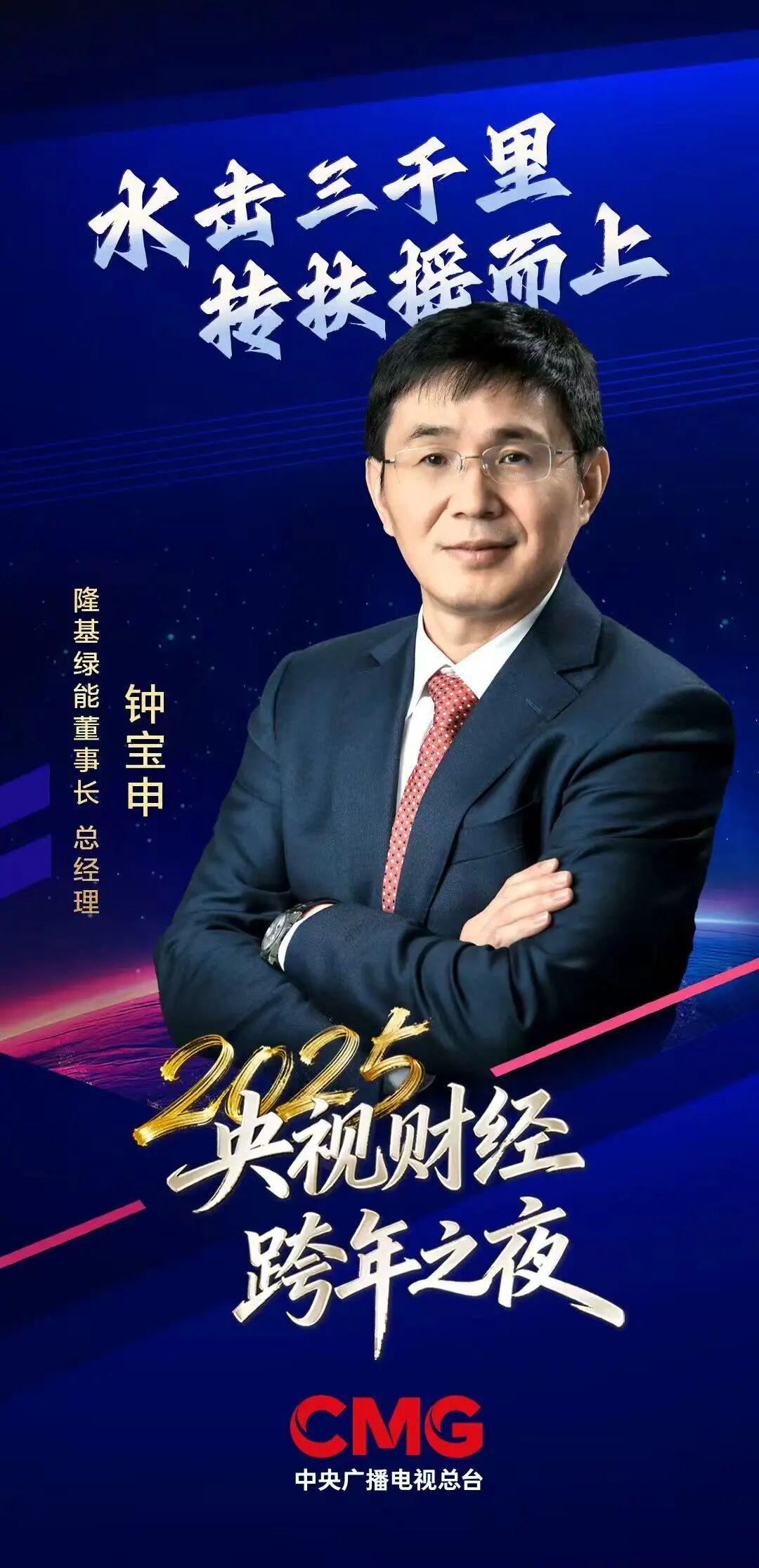
To brave the raging currents at midstream tests not only one’s courage, but also one’s wisdom and steadfastness. Zhong Baoshen believes that the global green energy transition has just begun, and AI’s demand for energy is also only just starting. The photovoltaic industry still has a long runway with substantial growth potential. An industry downturn is not the end of the world; it is a cleansing process that separates the wheat from the chaff, and also an opportunity for breakthrough and rebirth. “Braving the torrential waters of the mainstream, we wield innovation as our oar; breaking through impasses to move forward, we let value serve as our guiding star.” At the 2025 CCTV Finance New Year’s Eve Gala, Zhong Baoshen urged, “In the new year, let us all summon the courage to blaze trails through mountains and build bridges over rivers, paddling vigorously in the mainstream of the photovoltaic industry and boldly breaking through existing constraints.”