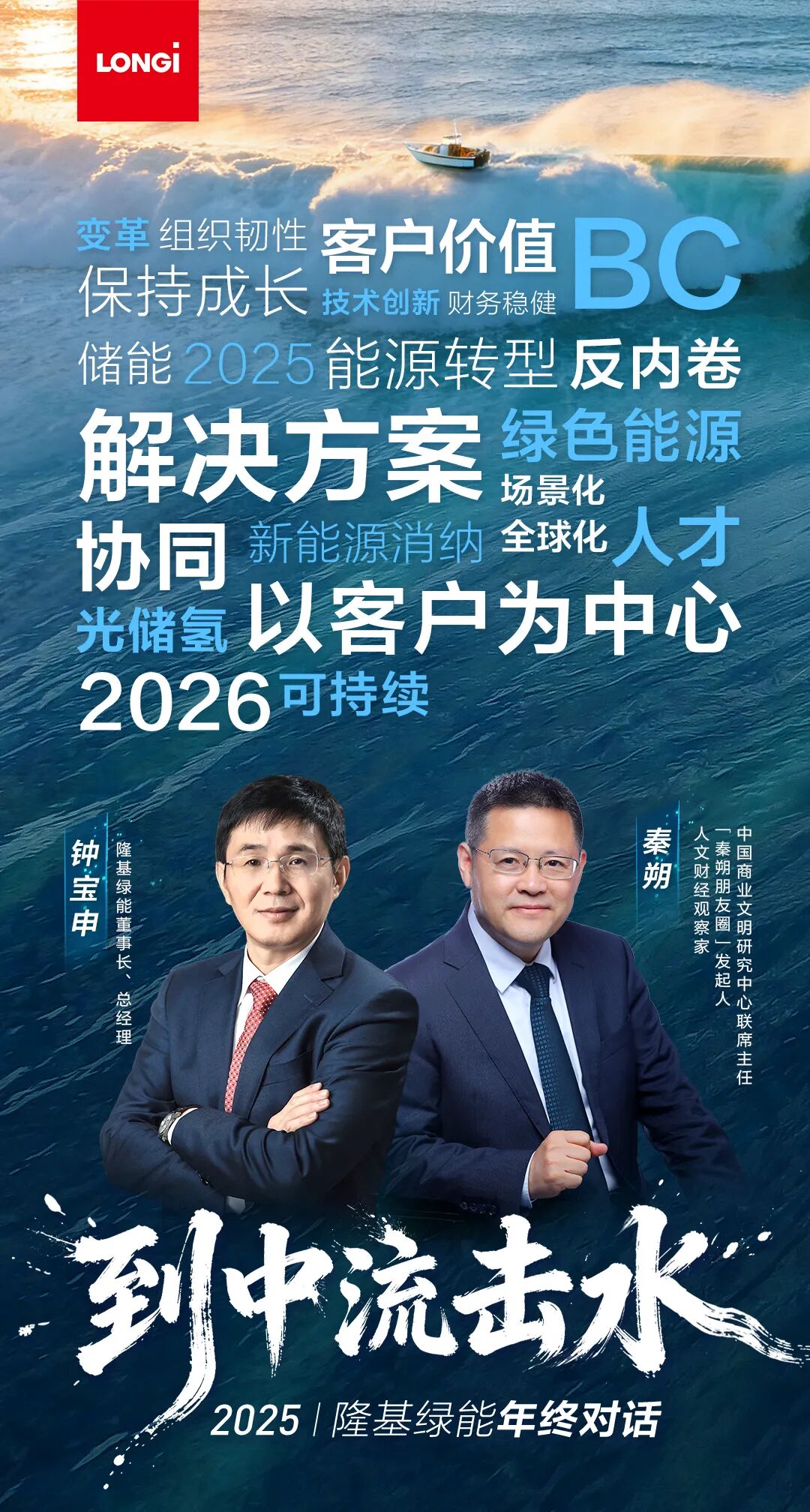
On December 31, 2025, Qin Shuo, co-director of the China Business Civilization Research Center, founder of the “Qin Shuo Circle,” and a cultural and economic commentator, held his fourth annual year-end dialogue with Zhong Baoshen, chairman and general manager of LONGi Green Energy. This year’s theme was “Striking the Midstream.” Over the course of nearly two hours, Qin Shuo and Zhong Baoshen delved into strategies for breaking the “involution” impasse facing the photovoltaic industry. They also discussed topics such as technological innovation, transformation and development, organizational resilience, and talent cultivation.
Below is the full transcript of the “Striding Forward” Longi Green Energy Year-End Dialogue 2025, presented in an abridged form for your reading.
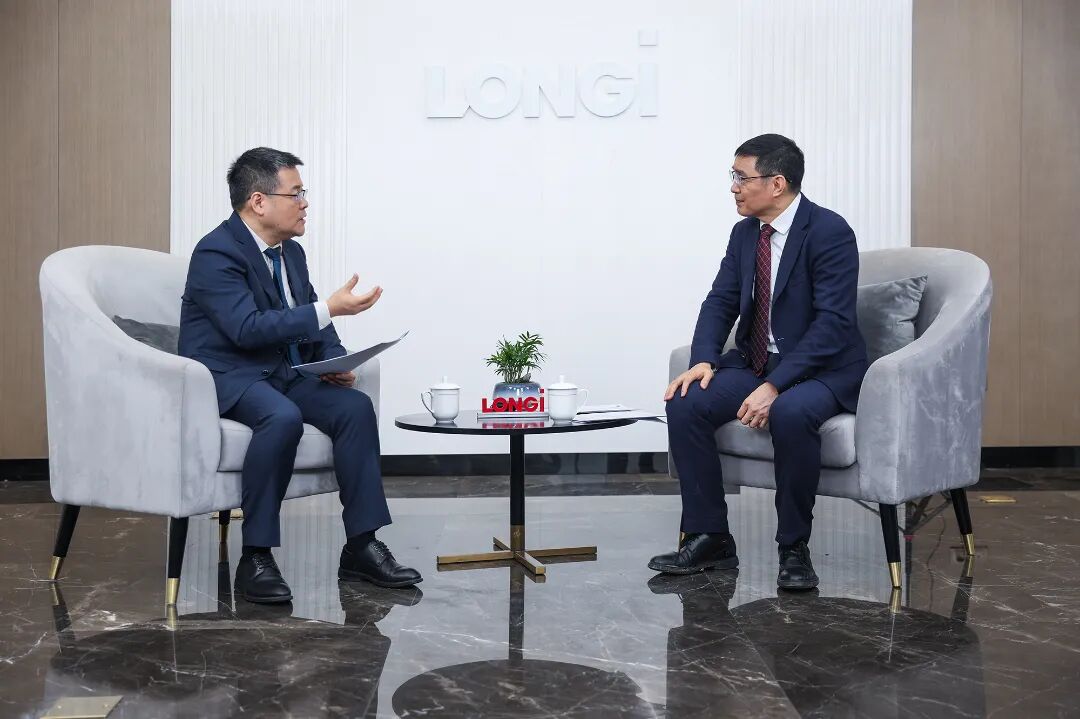
Qin Shuo: It’s that time of year again—back in Xi’an. I’m delighted to sit down with Chairman Zhong Baoshen for Longi Green Energy’s end-of-year conversation for 2025. This year, our theme is “Striking the Waters at Midstream.” “Midstream” refers to the central part of a river—the most rapid and perilous section. Mr. Zhong, looking back on 2025, do you see more turbulent waves, or the forward-driving momentum of a surging tide?
Zhong Baoshen: Overall, the industry is still being driven primarily by that surging forward momentum. Underpinned by this overarching momentum, there are indeed headwinds and risks along the way. Especially from the perspective of the photovoltaic industry, the global energy transition is an irreversible trend that continues to gain momentum. Taking China as an example, this year’s Central Economic Work Conference explicitly stated the need to uphold green and low-carbon development and to shift from dual control over energy consumption to dual control over carbon emissions. At the same time, we recognize that the “dual carbon” goals are unwavering, and the Chinese government has officially set its Nationally Determined Contributions target for 2035. All of this indicates that society as a whole is firmly advancing toward green, low-carbon development. Based on concrete data calculations, the demand for new energy sources is enormous, reflecting the powerful and accelerating momentum of the new-energy transition. Of course, we are also witnessing numerous real-world risks, such as supply-demand imbalances and price collapses that have resulted in operating losses across the entire industry. In the process of advancing the development of a new energy system, numerous challenges remain, encompassing institutional and regulatory barriers as well as technical and specialized hurdles. Addressing these issues will require concerted efforts across the entire industry. If these challenges are not effectively addressed, the development of new energy will continue to encounter various setbacks. Therefore, the “mainstream” we are witnessing is characterized both by a powerful, surging momentum in new energy development and by a host of challenges that must be addressed one by one.
Qin Shuo: Looking back on 2025, was there a particular moment that deeply moved or impressed you?
Zhong Baoshen: For the company, there were indeed some very memorable moments. That was at the end of the first quarter. At the time, we judged that the first-generation BC product lacked sufficient and clear competitiveness, and the company was considering delisting it. Meanwhile, second-generation production capacity in BC is under construction, and both technological advancement and mass-production progress are accelerating. The entire process requires company-wide coordination: The Central Research Institute must seamlessly transfer the technology into the mass-production system and deeply integrate it with the manufacturing operations, swiftly resolving all production issues to achieve stable, large-scale, low-cost, high-yield manufacturing of the product.
The marketing department is under even greater pressure. As the first-generation product is phased out and the second-generation product is launched, there is inevitably a gap in their alignment. This necessitates significant time for business reorganization, customer coordination, and explanatory communications. Many customers have already completed their design selections based on the first-generation product, resulting in extended implementation cycles. We need to coordinate inventory preparation and logistics while guiding these customers toward the new generation of products.
Throughout the entire process, the team did not complain. Rather than passing the buck over the product’s swift discontinuation shortly after launch, the sales department proactively reassured customers and coordinated to address their needs. Fluctuations are inevitable in the early stages of new product launch, and production ramp-up may fall short of expectations. Nevertheless, the team continues to communicate patiently with customers and work together to overcome these challenges. What I see is a team spirit characterized by high levels of collaboration, resilience, and a shared drive to win. This close interdepartmental collaboration and unified, concerted action deeply moved me, and enabled us to navigate this phase of the transition relatively smoothly.
1. Striking the Waves at Midstream — Standing Firm in the Middle: How Can One Steadfastly Hold the Vanguard?
Qin Shuo: I found this very enlightening. First, making a decisive call to delist a new product shortly after its launch is no easy feat. Second, there is no mutual complaining among internal teams, which reflects the organization’s cultural foundation. Third, the customer’s ultimate acceptance and understanding may also be attributable to the company’s years of accumulated experience and expertise.
This also shows that the entire industry is undergoing a difficult period of adjustment. Over the past year, “anti-involution” has become a key buzzword. In your view, what are the specific root causes of “involution” in the photovoltaic industry? Is it an inevitable outcome of homogeneous competition and overcapacity, or does it signify that the industry’s development model has reached a critical juncture demanding fundamental transformation?
Zhong Baoshen: Let’s first take a step back and examine the process of involution in the PV sector. What exactly has transpired? Global demand stood at 130GW in 2020 and is projected to reach 530GW by 2024, representing a compound annual growth rate of over 40% over four years. This underscores the close link between production capacity and profitability. As a result, incumbent players have been rapidly expanding their manufacturing capacity and pursuing scale-up, while numerous new entrants, recognizing the industry’s bright prospects and substantial profit potential, have also been actively joining the market. Therefore, within a very short period of time, the industry developed substantial production capacity. Looking ahead to 2024–2026, the growth rate will soon decelerate, likely settling around 10%, which represents a stark contrast to the previous 40% pace. This immediately gives rise to a new problem: homogeneous production capacity significantly exceeds demand. In this scenario, companies compete fiercely for survival by engaging in a price war, ultimately resulting in losses across the entire industry. According to data from the China Photovoltaic Industry Association, in the first three quarters of 2025, more than 30 companies across the main links of the PV industry chain recorded combined losses exceeding RMB 30 billion. This has led to a widespread perception of losses and intense involution, but at its core, the problem remains that homogeneous production capacity far exceeds demand.
At the same time, the industry has indeed reached a crossroads where it must shift its business model. In the past, scale was equated with profit, giving rise to a rigid mental paradigm: corporate growth was pursued solely for the sake of size, with the assumption that larger scale automatically translated into strength and profitability. However, scale no longer drives profitability. The industry must shift toward high-quality development, moving away from a growth-at-all-costs approach. Instead, companies need to become stronger, more sustainable, and capable of achieving long-term competitive advantage. This poses new transformation challenges for both industries and enterprises.
Qin Shuo: Amid the widespread anxiety gripping the industry today, to truly break out of this predicament, beyond industry restructuring and consolidation, the more critical question is: Where should we head from here? What will drive future growth? How should we strike a balance between short-term survival and long-term strategy and direction? Could you share your in-depth reflections on these issues?
Zhong Baoshen: Many companies and individuals in the industry are currently in touch with me, and they all feel quite lost. So-called anxiety is, at its core, a state of disorientation. When current operations are mired in losses and no profits are in sight, and the path forward remains unclear, people naturally experience anxiety. Personally, I don’t feel particularly anxious about it. Overall, I’m taking a fairly calm and composed approach to the situation. Where is the direction of industry transformation? Everyone must recognize that the era of growth driven solely by manufacturing scale has come to an end. It is crucial to understand this clearly. The reason is oversupply driven by homogeneous capacity; there is no justification for expecting higher profits. So, in which direction should the transformation proceed? It must return to the inherent laws of industrial development. The period of rapid growth has passed, and the industry is now transitioning into a market characterized by moderate-to-low growth and intensifying competition over existing market share. At this time, we should focus even more on the customer. In the past, when developing products, we didn’t thoroughly uncover customers’ true needs. In the future, we must drive innovation to gain deeper insights into customers’ emerging pain points. By addressing these new challenges, we can unlock fresh business opportunities for the enterprise. Therefore, in the long run, the key to success lies in steadfastly pursuing innovation and high-quality development, with a focus on addressing customer pain points to unlock new growth opportunities.
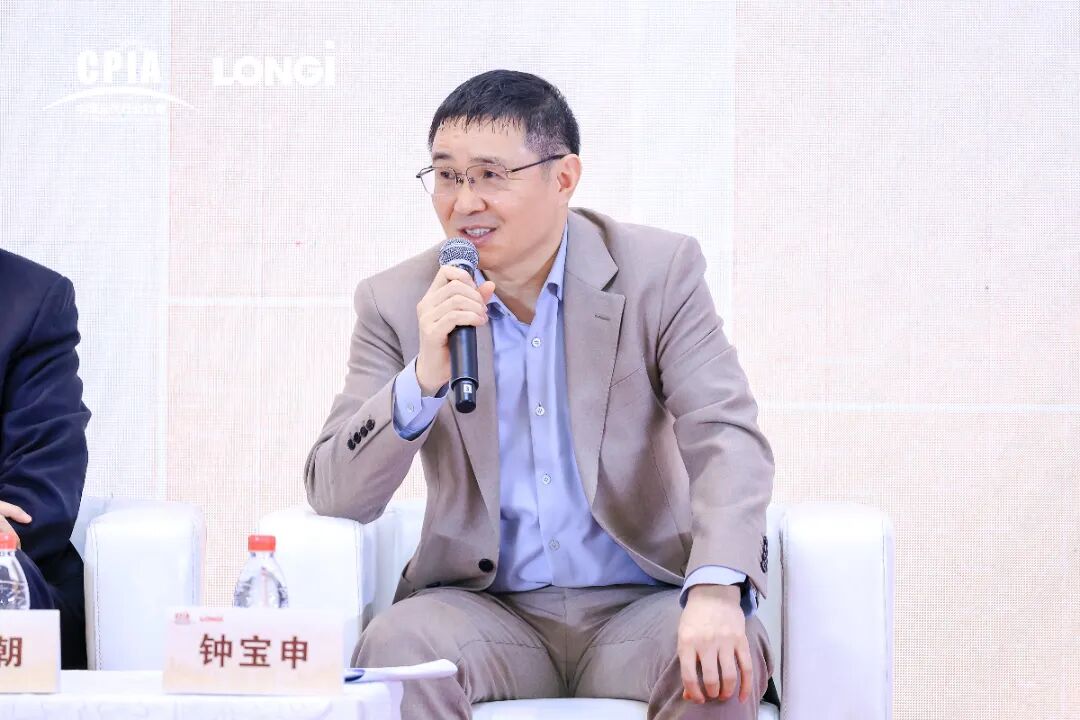
■ On December 18, during the “2025 PV Industry Annual Conference – Experts’ Leadership Dialogue” held in Xi’an, Zhong Baoshen, Chairman and General Manager of LONGi Green Energy, pointed out that self-regulation in the photovoltaic industry will be most effective when it is integrated with initiatives focused on standard-setting, supporting and strengthening leading companies, and technological innovation.
Qin Shuo: In the past, there was what was known as the “smile curve.” When there is limited room for further efficiency gains in the manufacturing phase, the only viable paths forward are either major breakthroughs in technological innovation or a strong shift toward service-oriented business models—essentially moving up that curve. In December 2025, the annual PV industry conference held in Xi’an also emphasized that “one of the key tasks during the PV industry’s transition period is to reject cutthroat, involutionary competition and solidify the foundation for high-quality PV development.” So, when it comes to thoroughly addressing “involutionary” competition, where do you think the fundamental or core issue lies?
Zhong Baoshen: Broadly speaking, efforts to tackle involution can be summarized in four key areas: fostering innovation, supporting and strengthening leading firms, using standards to guide the industry, and promoting self-regulation within the sector. We believe that the issue of involution can only be truly resolved through innovation and high-quality development. We should support original, innovative technologies and drive innovation by truly focusing on customers’ pain points. In this regard, addressing involution still requires adhering to standards-led approaches. The market should raise quality and technical standards to elevate the barriers to entry. This would compel firms that fail to meet the requirements either to undertake technological upgrades or to merge with and restructure alongside other enterprises, thereby supporting leading and strong players while fostering innovation. By establishing quality and technical standards as entry barriers, opening the market to high-quality, innovative, high-value-added, and efficient products while closing it off to low-efficiency, low-quality ones, market supply will naturally improve. Competition will then shift from vicious “involutionary” rivalry to a healthy competitive ecosystem centered on innovation.
Furthermore, industry self-regulation is also important. We must uphold and comply with the Anti-Unfair Competition Law and the Bidding Law, and refrain from selling products below cost. This is both a matter of self-regulation and one that requires the joint involvement of regulatory and law-enforcement agencies to curb unfair competitive practices.
On the other hand, quality supervision should not be overlooked either. Under intense internal competition, companies often excessively cut costs, resulting in declining product quality. Based on data from testing laboratories and real-world market feedback, the average quality of photovoltaic products has declined significantly compared with previous years. When businesses are teetering on the brink of survival, they inevitably keep slashing costs and pushing the boundaries of quality standards. Therefore, regulatory authorities must rigorously crack down on substandard and counterfeit products to effectively safeguard consumer interests. This requires a concerted effort by government law-enforcement agencies, industry self-regulation, and government departments to jointly steer the industry onto a path of healthy development.
Qin Shuo: To break the trap of involution, innovation is crucial. What do you think will be the next key technological innovation? I understand that Longi has already progressed from BC 1.0 to BC 2.0, and that the 2.0 production line is operating at full capacity. Clearly, you’ve done considerable thinking and practical work in this area. “In your choices and practices regarding technological innovation in 2025, have you had any particularly profound insights?”
Zhong Baoshen: Longi’s innovation primarily focuses on two key areas. The first priority is innovation in core, foundational solar technologies. As you just mentioned, we have been advancing with BC technology—from BC 1.0 to BC 2.0, and we are likely to continue upgrading to BC 3.0 and beyond. At the same time, we are also conducting research on silicon–perovskite tandem cells. Research into these foundational technologies in the solar energy sector all face significant challenges, including large R&D investments, long development cycles, and high uncertainty. However, once breakthroughs are achieved, they can establish substantial technological barriers and substantially advance the industry.This is the direction we have always upheld.
The second direction is scenario innovation, which we believe is becoming increasingly important. In the past, the industry was in a period of rapid demand growth—essentially a somewhat supply-constrained market. As a result, companies tended to focus primarily on manufacturing their own products, often paying insufficient attention to whether those products aligned with customers’ actual use cases or delivered the highest possible customer satisfaction and fit. Today’s era of high growth has come to an end. Companies must now build their competitive advantage through customer satisfaction, meaning that different scenarios call for different products and solutions. Through scenario innovation, companies can expand their sales volume, enhance customer satisfaction, and ultimately drive business success. For LONGi, we have consistently pursued innovation in these two areas and, over the past years, have achieved solid results. On the front of foundational technology innovation, this year’s BC 2.0 product was very successfully launched into the market with a remarkably short ramp-up period. Currently, the product’s quality, performance, yield rate, and cost have all met expectations, establishing a strong market position.
In terms of product offerings for various application scenarios, we have launched innovative products and solutions such as the Hi-MO X10 triple-protection module and the LONGi Hi ROOF S system. Take LONGi Hi ROOF S as an example. It is designed for commercial and industrial metal roofs and uses structural adhesive to integrate the photovoltaic system with the roof into a flexible, unified assembly. This installation method requires no nails whatsoever, causes no damage to the roof, and significantly enhances safety. Meanwhile, because the LONGi Hi ROOF S has no frame, it naturally resists dust accumulation, which can enhance power generation.
After these products were launched, they were very well received by customers. Not only does it address customers’ pain points, but its profitability also significantly outperforms that of standardized products. I believe this is highly valuable and meaningful.
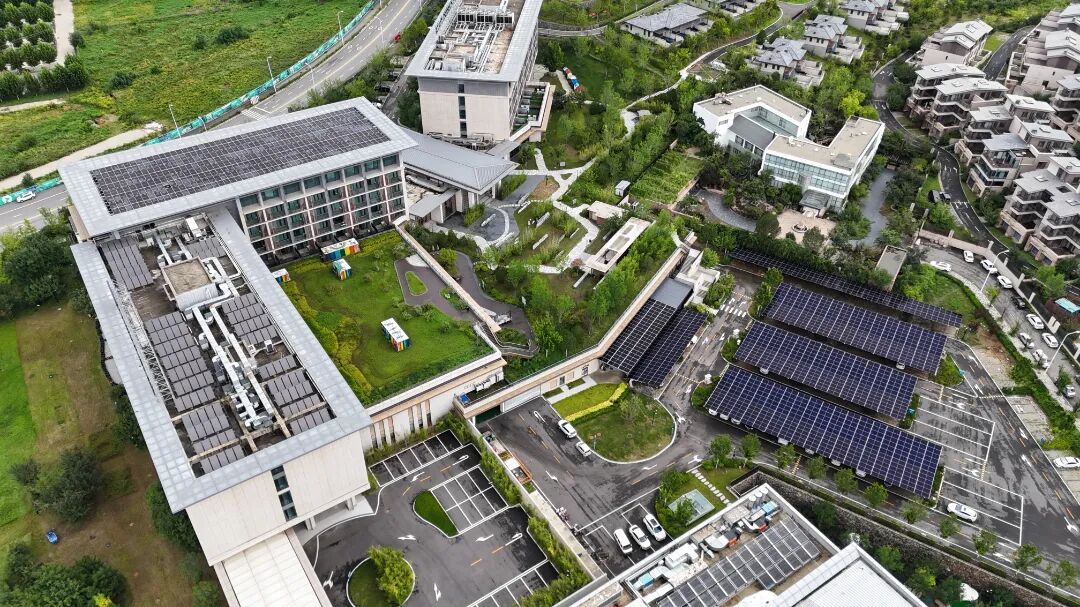
■ The first LONGi HiROOF S integrated solar-storage-charging demonstration project in the Beijing-Tianjin-Hebei region: park and charge, while the rooftop generates electricity.
Qin Shuo: You’ve explained it very clearly. I have observed that, when choosing innovation pathways, some Chinese companies tend to favor a vertically integrated model, aiming to dominate nearly the entire value chain from upstream to downstream. If a particular link in the value chain initially lacks sufficient capabilities, companies will often enter through partnerships first, then gradually build out their own independent operations, placing increasing emphasis on vertical integration. Longi, on the other hand, strikes me as a company that, while consistently safeguarding its core technological innovation capabilities, places greater emphasis on open, ecosystem-based collaboration. It has an extensive network of partners and readily acknowledges the value these partners bring in various settings. How did you arrive at this strategic choice?
Zhong Baoshen: I believe technological changes in society are happening very rapidly, making it difficult to predict which areas will see new developments. Therefore, companies should remain focused on their core technologies, while complementary supporting technologies can be developed by different firms. This approach is more efficient, reduces R&D costs, and avoids myopic thinking. If a company’s R&D team attempts to cover too broad a range of areas, it will be difficult to achieve deep expertise in each one. Setting excessively high expectations may even result in substantive lagging behind in certain fields, while internal performance evaluations are prone to becoming inaccurate. Therefore, LONGi will concentrate its resources on areas where it excels, where there are clear opportunities for breakthroughs, and where no other players are currently performing well, in order to achieve significant advancements. In areas where existing research institutions already possess strong capabilities, we tend to collaborate more closely.
Taking perovskites as an example. There is extensive research in this field, and LONGi is continuously exploring new avenues. The company has set a world record in tandem cell technology with an efficiency of 35%. At the same time, we are also actively collaborating with external partners. This is because other teams started mass production of perovskite cells earlier and have more extensive experience. Through collaboration, we are jointly exploring ways to accelerate time-to-market and optimize mass-production plans. Longi’s own research is primarily focused on pioneering technological frontiers. We maintain an open stance in R&D, collaborating with and supporting partners in areas where they hold a competitive edge. By working together, we create and share value.
Qin Shuo: Very good. Over the past one to two years, whenever global attention has turned to China’s industrial competitiveness and the innovative capabilities of Chinese firms, a recurring question has emerged: What are the core drivers behind this? Why has this surge in innovation and competitiveness suddenly taken hold at this particular moment? I’ve seen various explanations, with the “engineer dividend” being among the most frequently cited. Once China sets a clear strategic direction, it can rapidly scale up mass production while delivering exceptional cost performance.
Moreover, many people have pointed out that we boast a comprehensive industrial support system that extends horizontally across all sectors and vertically through every tier of the value chain. Others have noted our highly competitive business environment, which compels companies to accelerate innovation and product iteration. Others noted that, because many technologies can borrow from and reuse each other, over time they accumulate to a critical mass where cross-disciplinary collaboration emerges, giving rise to innovation breakthroughs that remain cost-effective.
So, what do you believe is the fundamental reason for China’s manufacturing sector to have entered an innovation-driven phase? Are there any factors that are difficult to fully capture using conventional Western analytical frameworks?
Zhong Baoshen: I think there are primarily three key factors. First is industrial development. China’s various basic industries have become relatively well-established, with many sectors reaching a high level of development. This has made it easier to draw on and integrate technologies across different fields. Geographic proximity also strengthens industrial synergy. This phenomenon is driven both by the engineering talent dividend and by the highly competitive market environment—both of which are inherent characteristics of the current stage of industry development. Second is a shift in awareness. As the industry has developed, stakeholders have come to recognize the importance of innovation, understanding that without it, it is difficult to find a sustainable path forward. Consequently, there is a growing willingness to embrace innovation. Third is financial support. As wealth has increased across society and accumulated to a certain extent, it has provided the necessary foundation for innovation.
I believe these three factors are the reasons why our innovation activities are currently very dynamic, yielding numerous and rapid results.
2. Striding Against the Current — At the Point of Striding, Which Course Shall We Take?
Qin Shuo: Recently, Longi officially entered the energy-storage business by acquiring Suzhou Jingkong. However, compared with some of its peers, this move appears to be a “late entry.” What’s your take? Why enter the energy storage business at this particular juncture?
Zhong Baoshen: Longi has been paying attention to the energy storage sector for seven or eight years, but until now we’ve just been monitoring the space without actually making a move. We have been constantly reflecting on one key question: By leveraging what capabilities can LONGi create greater value for our customers and ensure the company’s success in this line of business? This is a question we keep asking ourselves. For the past few years, we’ve been searching for that sweet spot, but we haven’t felt we could develop a distinct competitive advantage in this area. If we focus on battery manufacturing and R&D, we do not have a first-mover advantage over specialized lithium-battery companies.
It was only in the past two years that we identified our core strengths, which are closely aligned with the development of the photovoltaic industry. Two years ago, the development of energy storage was very slow. The root cause was that daytime electricity demand was high, yet supply was insufficient and electricity prices were elevated. The large-scale deployment of photovoltaic (PV) generation first filled the gap in daytime power supply, thereby reducing the urgency for energy storage. However, today, as photovoltaic power generation approaches saturation during daylight hours, surplus electricity must be shifted to other time periods, making energy storage critically important. We believe that energy storage is only now entering its early breakout phase, and it will be a rapidly growing market over the next few years. During discussions with international clients such as EDF, ENEL, and Iberdrola, they repeatedly asked why LONGi has not entered the energy storage sector. They stated that there are limited options among existing energy storage providers, and they are particularly concerned about the long-term operation, as well as the service requirements and guarantees throughout the operational process. Energy storage systems are typically required to operate reliably for 20 years, which places extremely high demands on product reliability and the continuity of after-sales services. The customer has been partnering with LONGi for ten years and places great trust in the company’s brand and service capabilities. If LONGi enters the energy storage sector, the customer is willing to designate LONGi as a key supplier, as choosing LONGi’s products would provide peace of mind. This highlights the intrinsic characteristics of energy storage: compared with highly reliable PV modules, the durability and reliability of energy storage batteries and power conversion equipment remain challenging. As a result, customers place greater emphasis on long-term operational assurance and comprehensive service support. Longi has already established a trusted brand image, a robust distribution network, and professional service capabilities in the global market. These advantages can be fully leveraged in the energy storage sector. Moreover, Jingkong has amassed a decade of expertise in energy-storage technology. Coupled with LONGi’s brand strength and extensive distribution channels, we believe that these combined advantages will enable LONGi to carve out a robust growth trajectory in the energy-storage sector.
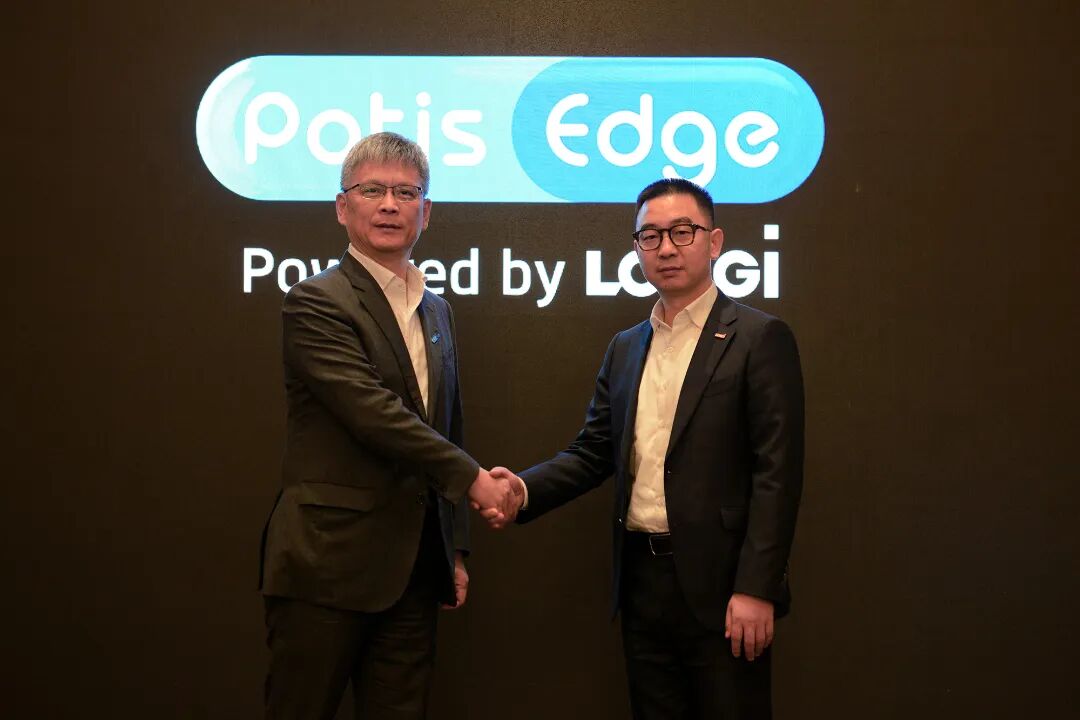
■ On November 26, Longi’s energy storage product solution launch event was grandly held in London, UK. To uphold its value proposition of “ultimate safety,” LONGi has chosen to engage in deep collaboration with Jingkong Energy, a leading expert in energy storage safety.
Qin Shuo: As I recall, your company was among the earliest to engage in green hydrogen production. You’ve progressed from “green electricity” to “green hydrogen” and now to “energy storage,” developing a comprehensive zero-carbon solution. Over the past year, do you think your company’s strategy for zero-carbon development has evolved or deepened in any significant way?
Zhong Baoshen: That’s quite a substantial change. In fact, this upgrade began two years ago. At that time, we deeply recognized that Longi had previously been merely a provider of a single energy product—photovoltaic modules. However, we have observed that the pain points in future customer demand have shifted: what customers now require is a provider of green energy solutions. Therefore, we must continuously expand our business segments and build a synergistic matrix centered on photovoltaics, energy storage, and hydrogen energy. Only through such a comprehensive layout can we truly provide customers with a complete clean-energy solution.
Qin Shuo: Longi is shifting from selling single products to providing diversified solutions. This is, in essence, a profound transformation—akin to an evolution from technology manufacturing to technology R&D and then to technology services. These three stages will ultimately form a new virtuous cycle. Do you think the urgency of such a transformation has already become palpable for LONGi?
Zhong Baoshen: I believe it is extremely urgent, and we are already under considerable pressure. As I just mentioned, the global energy transition requires well-designed strategies. In the past, the development of photovoltaic power primarily served to address daytime electricity shortages. A complete power system comprises generation, transmission and distribution networks, load, and energy storage. Photovoltaics only address a portion of the “generation” challenge—namely, daytime electricity supply. However, due to the intermittent nature of photovoltaic power, ensuring a stable supply of green energy during other time periods remains unresolved. At this point, energy storage becomes essential to shift the photovoltaic power generated during the day for use at other times. Without energy storage solutions, the development of photovoltaics will soon hit a bottleneck: once daytime power supply reaches saturation, further growth will be constrained. However, the energy transition and the shift to alternative energy sources have only just begun. Therefore, energy storage plays a crucial role. At the same time, these diverse energy systems need to be integrated and transformed into practical, user-friendly power-supply solutions that customers can easily and effectively utilize. Therefore, for PV companies like ours, the key is to address our customers’ pain points. Once those challenges are resolved, the clean-energy market will expand, along with the PV market, the energy-storage market, and the solutions market, ultimately accelerating the energy-transition process. This is our mission, and it also represents our opportunity for growth.
Qin Shuo: Currently, the integration and consumption of new energy sources indeed pose a severe challenge to our industry. In your view, what are the root causes of this challenge? Whose responsibility is it, and how should we address it? What role does LONGi play in this process?
Zhong Baoshen: Promoting the development of renewable energy and achieving a global energy transition is, first and foremost, a shared responsibility of the entire society. This is both to address climate change and to develop sustainable clean energy sources that humanity can rely on in the future. Throughout this process, different stakeholders assume distinct responsibilities: the government is tasked with fostering the deployment and integration of renewable energy through policy measures and a supportive regulatory environment. As energy providers and service operators, we are committed to delivering a sustainable, green, and reliable clean-energy system that can be reliably supplied to our customers. Overall, as stewards of energy security, we need to leverage technological innovation, diversify the energy mix, and promote integration among different energy sources to build an affordable, stable, and reliable green energy system.In building an affordable, sustainable, and stable clean-energy system, we must address the myriad challenges through innovation. Only in this way can society be genuinely willing and able to adopt and utilize such a system. Therefore, all parties bear corresponding responsibilities and need to advance the work in a coordinated manner.
Qin Shuo: Longi is driving a new phase of transformation and leapfrog development, moving toward becoming a diversified, decentralized, personalized, and scenario-driven provider of zero-carbon solutions. Such a transformation will undoubtedly pose significant challenges across multiple dimensions, including strategy, organization, operating models, and customer relationships. You mentioned resolving customer issues across various scenarios, which essentially signifies an expansion into service and solution capabilities, placing higher demands on solution design, customer communication, and other related areas. At the same time, the industry is currently grappling with widespread financial and operational pressures. Expanding into new use-case applications, however, requires additional human resource investment, and management approaches must shift away from the standardized, mass-production mindset of the past. In the course of such a systemic transformation, what new core capabilities do you think LONGi most needs to develop? And what key breakthroughs must it achieve?
Zhong Baoshen: I believe Professor Qin’s question is both profound and highly professional. It also touches on a very practical, real-world challenge that companies face when undertaking strategic transformation or organizational change. First, there is significant financial pressure: the legacy business is unprofitable, while the new business requires ongoing investment. More critically, the organization tends to develop cognitive biases and rigid thinking patterns. If it continues to rely on established working methods, it will be extremely difficult to break new ground. That’s why we’ve been consistently emphasizing this point.
In response, we are primarily advancing efforts on two fronts: First, we must cultivate a sense of urgency and a mindset geared toward continuous learning. We consistently communicate to the team that industries, at different stages of development, invariably require distinct growth models to address their unique challenges. In the past, companies could secure victory and commercial success simply by offering cutting-edge products. However, in an environment of oversupply, merely providing products is no longer sufficient to generate profits. At this point, the customer’s pain points have shifted, so it’s essential to proactively research and design targeted solutions in order to identify new growth opportunities. We have been consistently instilling a sense of urgency among everyone, emphasizing that the work we do today must lead to changes by tomorrow. By fostering a learning mindset driven by this sense of urgency, we can develop a more proactive and forward-looking perspective on the future. Second, we must continuously create new businesses and new demonstration projects. Help the team see that we are constantly evolving and never rely on a single growth model, enabling us to seize future growth opportunities. We are constantly evolving. The team is psychologically very open to change and is well prepared. In that case, I believe it will be easier to meet the challenges. Over the past few years, LONGi has been continuously developing scenario-specific products and progressively segmenting its business. These new ventures have consistently provided valuable insights to the teams focused on our core operations. The success of these new initiatives—such as effectively addressing real-world pain points and achieving customer satisfaction by seamlessly integrating services with technology—has reinforced a key lesson: innovation must always be centered on delivering customer value. Customer demands are constantly evolving, and businesses must continuously iterate to keep pace.
Carrying out these two initiatives in tandem is crucial for shifting the team’s mindset and understanding. At the same time, internally we need to intensify our efforts in organic talent development, enabling employees to continuously engage with new knowledge and acquire diverse professional skills, thereby cultivating adaptable, change-ready talent. Through this series of measures, the organization has first and foremost built internal capacity and aligned its mindset, thereby laying a solid foundation. Furthermore, financial stability is the cornerstone of transformation. There is widespread anxiety across the industry, but I remain relatively composed. This stems from LONGi’s long-standing commitment to a prudent financial strategy that enables it to navigate industry shifts effectively.
Prior to the transformation, we had already built up a robust resource base, ensuring both financial stability to enable the company to embark on the transition in a secure environment and a comprehensive organizational framework to foster alignment in mindset, awareness, culture, and capabilities across the team. Conducting material preparation in tandem with organizational capability building is crucial for enterprises to achieve continuous transformation and remain agile in response to market changes.
Qin Shuo: I’ve observed that many large Chinese enterprises, once they reach a certain stage of development, are confronted with the need to undergo transformation—some because their existing growth trajectory has become unsustainable, while others seek to enhance their value-added offerings. Longi has been exploring this area for one to two years. For example, the nail-free adhesive mounting solution for commercial and industrial rooftops you mentioned is a very concrete implementation. I’m curious: As you advance scene-based innovation, has a systematic mechanism for capturing and sharing internal insights and best practices been established? For example, could regular case-study workshops facilitate cross-team learning and knowledge transfer? Could you share some specific cases in this area?
Zhong Baoshen: We have an internal “Spark Program” incentive mechanism. Each month, we select and publicly recognize outstanding projects, and then disseminate these best practices throughout the entire company. In addition, we incorporate case-study sharing sessions into various meetings, such as marketing conferences and product launch events. Continuously promote best practices through various meetings, enabling more people to understand how different teams leverage customer insights and cross-disciplinary collaboration to co-create innovative solutions. This kind of knowledge sharing not only sparks the team’s creativity and enthusiasm for learning, but also boosts the overall vitality of the organization.
3. Striding Through the Midstream—How Can Wave-Riders Sustain Their Momentum?
Qin Shuo: I recall that during your visit two or three years ago, you mentioned you were devoting considerable effort to strengthening the organization. This indicates that at the current stage of their development, companies can no longer focus solely on finance, technology, or market strategy; internal organizational capabilities, corporate culture, and resilience are equally critical. Only in this way can we withstand storms and keep sailing forward. In this regard, what new insights have emerged over the past year or two?
Zhong Baoshen: I now have a much deeper understanding that the core of any enterprise lies in cultivating talent and fostering personal growth. This is, in fact, the true mission of a company.
Although we often discuss our business mission, our deepest and most fundamental mission is undoubtedly to cultivate talent and foster its development. Only by embedding this principle at the very core of a company’s ethos can the organization achieve sustainable growth. If a company fails to establish systematic mechanisms to foster employee development, its future growth will lack sustainable support.
Qin Shuo: Today, Longi has grown into a large enterprise with tens of thousands of employees and a vast network of overseas subsidiaries. At the same time, it is driving transformation, exploring new business opportunities, and expanding into areas such as energy storage. As organizations undergo dynamic adjustments, leaders face a significant challenge: how to maintain agile responsiveness to market changes while preserving the organization’s resilience, stability, and cohesion, all without descending into chaos. In other words, the organizational resilience and adaptability required by “swimming against the tide” appear to be greater than ever before. Do you feel the same way?
Zhong Baoshen: Indeed. Once a company scales up, the challenges it faces in fostering organizational vitality and maintaining agility are entirely different from those encountered by small businesses. The larger the organization, the more critical it is to ensure “alignment across all levels and a shared sense of purpose,” which is significantly more challenging to achieve than in a startup. Small businesses have clearly defined objectives, whereas in large enterprises, when goals are cascaded and broken down through multiple layers, it often results in misalignment between upper- and lower-level objectives and a lack of alignment across the organization. This is because aligning the aspirations of management and employees and ensuring everyone is focused on the same goals are critical steps for effectively implementing a company’s strategy.
Moreover, it is equally important to empower those on the front lines—those who are closest to the action—with greater resources and decision-making authority. When a company is small, it is relatively easy to consolidate information at the decision-making level, and matters tend to be more centralized. As the organization grows and its business scope expands, it becomes essential to allocate resources to the front line, delegate authority appropriately, and establish platforms that enable frontline teams to effectively exercise their decision-making powers. All of these have become important components of organizational development. Overall, we believe that as an organization grows, achieving greater agility and resilience requires aligning the entire company around a common vision, ensuring clear goal alignment, and empowering front-line teams—those closest to the customer—to access better resources and make informed decisions. These two matters are very important.
Qin Shuo: Moving from a focus on product leadership to delivering scenario-based solutions, and from deepening expertise in photovoltaics to expanding into diversified green energy sectors, these shifts have placed new demands on the capabilities of Longi’s workforce. In my early impressions, Longi’s team members struck me as “specialized, refined, distinctive, and innovative” technology pioneers: deeply focused, consistently pushing boundaries, and continually setting new records. Today, the focus of transformation places greater emphasis on gaining deep insights into customer needs, building empathy, and co-creating solutions with customers. In this process, what kind of profile do you think the next generation of Longi talent should have? And how should the company systematically cultivate such talent to ensure a continuous stream of high-caliber professionals emerges?
Zhong Baoshen: Your observation is very insightful. Indeed, in the past, LONGi has placed greater emphasis on technological innovation, particularly through sustained investment in foundational photovoltaic technologies, leveraging breakthroughs to drive the company’s growth. Today, we have clearly defined innovation along two equally important tracks: while continuing to make breakthroughs in foundational technologies, we have also been fully committed in recent years to scenario-based innovation, which is equally critical to the company’s development.
To develop more customer-centric talent who can innovate around customer needs, we are focusing on two key areas:
First, we emphasize values and learning agility. We identify and continuously develop talent from the grassroots level who align with our corporate values, are committed to serving customers, and demonstrate a strong ability to learn. Learning ability is the foundational competency that underpins talent development. Second, it is about developing “T-shaped” talent. We look for talent who possess both deep domain expertise in specific verticals—such as photovoltaics, energy storage, and energy interconnection—and broad, cross-disciplinary knowledge. Candidates should have a solid professional foundation while also demonstrating a comprehensive understanding of the energy services sector. We need to place such personnel in core, innovation-driven roles.
Qin Shuo: The photovoltaic industry is dedicated to advancing human sustainable development, yet it frequently faces the question: Can companies within the industry itself achieve sustainability? If businesses struggle to remain viable, how can they honor their long-term commitments to customers—such as guaranteeing product lifecycles and providing ongoing service? This leads to a crucial question: As enterprises, particularly industry leaders, how can they ensure their own sustainable development?
I have spoken with many Chinese manufacturing entrepreneurs. Some believe technology is paramount; others stress the importance of product strategy; still others regard developing new growth trajectories as essential. Yet others view talent, values, and corporate culture as the very foundation of long-term success. Specifically with regard to LONGi, as the chairman, how do you view this issue?
Zhong Baoshen: I believe it comes down to two key points. First, a company must embrace a customer-centric philosophy and consistently place the customer at the heart of its operations. Second, it must have the capability to create value for its customers. These two aspects require continuous nurturing and maintenance by the enterprise, as well as ongoing cyclical reflection. How are customer pain points evolving? This fundamentally guides the strategic direction. A strategy should be grounded in the continuous observation of customer needs—gaining insights into emerging trends and new demands—and use these insights as the core to iteratively refine the strategy, ensuring it remains aligned with societal change. Secondly, there is long-term capability building. Once customer needs are understood, the next step is strategic execution.
Qin Shuo: I believe Longi will face a variety of challenges in the next year or two. How do you reassure your stakeholders and put their minds at ease? What, in your view, enables Longi to help everyone maintain confidence and composure?
Zhong Baoshen: Above all, Longi relies on financial health and technological innovation—these are our two fundamental pillars.
Thereby gaining market confidence and customer confidence.Qin Shuo: I’ve read reports stating that Longi’s debt-to-asset ratio appears to be significantly lower than the industry average.
Zhong Baoshen: Our debt-to-asset ratio is more than 15 percentage points lower than the average of the top few companies in the industry. This stems from our assessment of the industry: the PV sector is highly volatile. Companies should avoid over-relying on leverage to capitalize on opportunities; instead, they must build sustainable financial resilience. This enables companies to undertake transformation and invest in innovation during industry downturns, ensuring that critical investments are maintained and allowing them to navigate challenging periods. Based on this assessment, we have consistently adhered to the principle of financial health.
On the other hand, there is technological innovation. For many years, LONGi has consistently chosen to do what is difficult yet right. As a result, its decision-making has repeatedly demonstrated the company’s ability to make sound choices and achieve breakthroughs in innovation. It is precisely because of our financial soundness and innovative capabilities that we have earned the trust of all sectors of society, which in turn bolsters the confidence of Longi’s employees.
Qin Shuo: I read Longi’s “Letter to Shareholders” in its 2024 annual report and was struck by the company’s profound spirit of self-reflection—for example, its candid analysis of launching the first-generation BC product before its advantages had fully materialized, followed by subsequent adjustments and impairment charges. This reflects the fact that an enterprise must both avoid path dependence and, in the face of setbacks, maintain a capacity for reflection while summoning the courage to move forward.
As a decision-maker like yourself, you have undoubtedly engaged in extensive reflection over the past few years regarding strategic judgment, your commitment to change, and other critical areas. Today, LONGi is embarking on a new journey toward diversified “zero-carbon” solutions. As a business leader, do you feel that you have reached a new level in areas such as resilience, strategic decision-making, pacing, organizational transformation, and reinvention, enabling you to better guide LONGi’s continued progress?
Zhong Baoshen: I may still be the biggest beneficiary of the company’s development. As Longi has grown from a small company into a global leader, it has also provided me with numerous learning opportunities, continuously driving my personal development.Companies encounter different challenges at each stage of their development, which has motivated me to continuously acquire new knowledge, deepen my understanding, and move forward together with my team. Therefore, the process of the company’s growth has also been a process in which I have been a key beneficiary. One habit I have is to always maintain a long-term optimistic outlook. Although my short-term outlook on many specific matters may be cautious, even pessimistic, I remain confident in the long term. This combination of short-term prudence and long-term optimism allows me to remain composed and at peace most of the time. In the long run, I remain firmly convinced of the direction we have chosen; in the short term, however, I see numerous risks and uncertainties, requiring us to persistently press ahead toward our long-term objectives. It can be said that Longi’s development approach aligns well with my personal way of thinking.
4. Striding Through the Midstream—The Tide-Setters and Their Companions
Qin Shuo: No great voyage is ever a solitary expedition undertaken by a single ship. Especially when our course is set for a vast ocean of “a sustainable future,” who joins us on this journey often determines how far we can go and what kind of shore we will ultimately reach. Today, we are honored to have invited three special “companions on the journey.”
First, please welcome Kevin from Belgium’s Innoptus Solar Team. This year, the team partnered with LONGi for the first time to co-develop a race car powered entirely by solar energy. I believe there will be differences between the two sides in terms of organizational culture and work pace. Could you share some insights from your collaboration? For example, what challenges did you encounter, and how did you leverage each other’s strengths to ultimately achieve what outcomes?
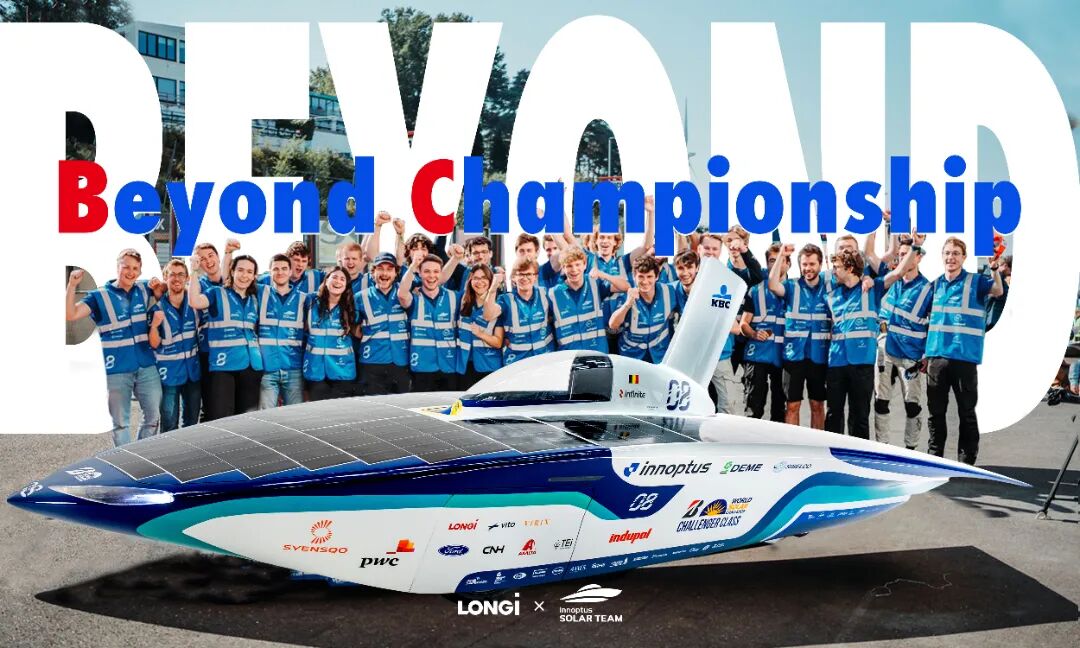
■ LONGi’s BC technology is supporting the Innoptus Solar Team as they compete in the World Solar Challenge.
Kevin: The Innoptus Solar Team is dedicated to building the world’s highest-performing all-solar race car and driving it across Australia, with the ultimate goal of winning the World Solar Challenge. Last year, we faced a major challenge: developing solar modules that could operate reliably in desert environments while maintaining extremely high efficiency. It was precisely this need that brought Longi and us together.
In fact, we had been familiar with LONGi for quite some time, but it wasn’t until a year ago that we held our first online meeting to explore potential avenues for collaboration. That exchange was very enjoyable: we identified shared interests, generated many intriguing ideas, and exchanged a wealth of data with one another. Subsequently, we received samples from LONGi, which gave us a preliminary sense of their technological capabilities and helped establish initial trust between the two parties. The real turning point came when our two engineers traveled to China in person to visit LONGi. That was a very magical meeting. Both sides engaged in in-depth knowledge sharing and open discussions, with the core objective being to validate the feasibility of Longi manufacturing flexible modules for racing vehicles. In just a few days, both teams have come up with a preliminary solution to what initially appeared to be a very challenging technical problem. Of course, we still have a long way to go before we can begin formal component production. The process is subject to numerous constraints: the timeline is extremely tight, resource availability is limited, and raw materials are in short supply. At the same time, our quality standards are exceptionally stringent—after all, racing components must deliver outstanding performance under extreme conditions.
In the end, we succeeded. We would like to express our special gratitude to LONGi for its adaptability to and inclusiveness of our team culture. We are a racing team with twenty years of history, known for our highly flexible and agile operating style. Longi was able to seamlessly align with our “way of working.” This cultural alignment brought us together in a genuine partnership and ultimately led to collaboration. The team received the components in Belgium on schedule. After completing additional tests, we jointly traversed the Australian outback. Therefore, I believe that LONGi possesses strong international capabilities and adaptability, enabling it to flexibly align with the working styles of various partners. Even though we are just a small team from Belgium, I firmly believe that LONGi can deliver on this for any customer. This is also why we have decided to continue deepening our collaboration with LONGi, take on more challenges, and secure further victories.
Qin Shuo: Thank you, Kevin. The story you shared was very vivid. So, if we broaden our perspective from a single match to the entire industry landscape, and consider that the PV sector as a whole is mired in a “involutionary” stalemate, shouldn’t we also forge a more long-term, robust innovation community to collectively navigate the cycle and emerge ahead? Next, we’d like to welcome Mr. Li Wenhong, Chairman of Shenzhen Shijin Technology Co., Ltd., to share Shijin Technology’s insights on this topic.
Mr. Li, Shijin Technology is an important partner in LONGi’s BC ecosystem. In your view, does this type of collaboration based on leading-edge technology offer a new approach and set of possibilities for breaking the industry’s intense competition and inefficiencies? As you’ve been building this ecosystem, what do you believe are the most challenging areas to reach consensus on, and what core principles are most worth upholding?
Li Wenhong: First of all, I’d like to thank LONGi for consistently leading technological breakthroughs in the PV industry—from monocrystalline silicon to diamond wire slicing, and from PERC cells to today’s BC technology—constantly expanding into new technical frontiers. BC battery technology is widely regarded as the pinnacle of crystalline silicon battery innovation, and LONGi has consistently remained at the forefront. Over the course of our long-term collaboration, we have earned Longi’s respect and trust, forging a partnership based on co-innovation. As a relatively small enterprise, through the collaboration opportunities offered by LONGi, we have gained a deeper understanding of industrial application technologies. Leveraging our expertise in our specialized field, we have also made several contributions to the carrier system used in the PECVD stage of BC battery manufacturing, particularly in the plasma discharge process.
Regarding collaborative innovation, I have a few insights to share. In particular, when it comes to breaking through industry “involution,” collaborative innovation may be a highly effective approach. One of the core objectives of photovoltaic technology is to continuously reduce the levelized cost of electricity and semiconductor manufacturing costs. This process places extremely high demands on process equipment, tooling, and consumables. To meet these requirements, end-user companies need to open up their application scenarios to facilitate robust collaboration among equipment suppliers, consumables providers, and front-line production engineering teams. Only through such joint efforts can technological advancements be driven, and process stability and consistency be improved. This is precisely the key to how collaborative innovation can help break through involution: by building up technological barriers over time, it gradually phases out outdated production capacity that cannot keep pace with technological advancements. Of course, establishing collaborative innovation is not easy. There are mainly several challenges: First, it is very difficult to establish a deep trust relationship. Given that it involves the core of the technology, how both parties can be assured that the technology will not be leaked is a key challenge in collaboration. We are very fortunate to have established such mutual trust with LONGi, and we deeply value this relationship. Second, the fundamental purpose of collaborative innovation is to help a major industry like photovoltaics gradually establish a stable production process system that is standardized, modularized, automated, and even AI-driven and digitized. This work is far from complete. It encompasses every stage of the entire production process and can only be realized through close collaboration among all stakeholders across the industry chain. Finally, let me share my personal perspective on the photovoltaic industry: it is a sector brimming with promise, set to profoundly transform the global energy mix and fundamentally address humanity’s energy challenges. As Musk put it, “The limit of computing power is electricity.” China is bound to become a major power in the electric power sector. To achieve this, every player across the industry value chain must contribute, and through collaborative innovation, these individual efforts can be harnessed into genuine industrial competitiveness.
Qin Shuo: Thank you, Mr. Li, for sharing your insights, which have illuminated the underlying logic of the industry’s evolution from competition to symbiosis. When we step back from these industry practices and view them within the broader global landscape of the energy transition and the race to achieve net zero, what does Chinese companies’ pioneering efforts signify? Moving forward, we are eager to hear objective insights from leading international research institutions. Today, we have invited Simon Tu, Head of China Research at BloombergNEF. Hello, Teacher Tang. BloombergNEF has been closely tracking the development of various decarbonization technologies for a long time. In your view, how will photovoltaic, wind power, green hydrogen, and other green energy technologies ultimately interact and collaborate on the path to net zero? Will they follow parallel tracks, developing independently in their respective optimal application domains, or will they need to be deeply integrated into a mutually reinforcing value network in order to systematically meet future energy demands?
Thomas: Throughout our long-term monitoring of various decarbonization technologies, our core mission can be summed up as “Connect the dots”—linking every step of the energy transition. With regard to the question you raised, our research findings are clear: on the current pathway to net zero, single technologies are increasingly reaching their limits. The key challenge in the future energy transition is not whether integration is necessary, but how to transform the energy trilemma into a viable reality through systematic, deep integration—achieving security, affordability, and sustainability simultaneously. Renewable energy, particularly wind and solar power, is undoubtedly the dominant force in the power system of the future. Under BNEF’s Net Zero Scenario, wind and solar power are projected to account for more than 70% of global electricity generation by 2050. However, as the penetration of wind and solar power increases, the overall system costs—particularly system integration costs—are likely to rise gradually, and may even exceed generation costs at times. The grid-connection bottlenecks and frequent negative electricity prices currently observed in many countries around the world are, at their core, manifestations of ineffective coordination across all segments of the power system. To achieve true peer-to-peer cascading, it is essential to rely on technological integration. Take wind and solar power as an example: energy storage enables the temporal shifting of electricity, while the power grid optimizes its spatial allocation. Meanwhile, technologies such as green hydrogen convert variable renewable electricity into stable molecular energy carriers by transforming its form. Underlying this is a fundamental shift in mindset: the new energy industry is moving from a “cost-competition” phase to a “value-creation” era. In the past, our primary focus was on levelized cost of electricity, module and turbine capital costs. Today, amid ongoing power-market liberalization, revenue depends not only on generation output but, more importantly, on the value these assets deliver to the entire power system. From this perspective, different technologies are not in competition with one another; rather, they reinforce each other and can even amplify each other’s value. For example, energy storage and green hydrogen can absorb excess electricity during periods of low demand and low prices, and then deliver higher value by supplying power during peak demand or in applications that are difficult to electrify. This cross-technology enablement can both convert otherwise discarded wind and solar power into high-value products and create room for cost reductions in higher-cost technologies such as green hydrogen, thereby accelerating their adoption across downstream industries like steel, chemicals, and shipping. Ultimately, this integration will converge at the end-user level. Whether it’s the recently much-discussed zero-carbon industrial parks, virtual power plants, or direct supply of green electricity, despite their different names and business models, they all rest on the same fundamental logic: in the future, demand for individual energy commodities will decline, while demand for integrated, low-carbon solutions will rise. Only by breaking down technological barriers and integrating disparate technologies into cohesive systems and networks can we meet the diverse needs of sectors such as power, transportation, industry, and construction across a wide range of applications, thereby achieving a balanced realization of the three overarching energy objectives: safety, cost-effectiveness, and sustainability.
Qin Shuo: For this year’s year-end conversation with President Zhong, we’ve prepared an interesting segment titled “If you had the chance to ask Chairman Zhong Baoshen a question, what would it be?” We solicited topics in advance from a diverse group of stakeholders worldwide, including partners, customers, investors, and employees. Today, we’ll randomly select a few of these questions on the spot and engage President Zhong in a brief Q&A session.
Question 1: Hello, Mr. Zhong. I’d like to install a rooftop PV system at my home in the countryside. However, the market is flooded with countless products, making it hard to choose. From the perspective of a professional in the industry, what advice would you offer for our specific needs and installation scenario?
Zhong Baoshen: For ordinary household users, installing a photovoltaic system at home does present a challenging decision. The market offers a wide variety of technologies and conflicting claims, making it difficult for non-experts to fully understand the technical details. As a residential PV owner, you should primarily consider three key factors:
First, choose a reputable, branded company. Brands typically signify more reliable product quality and long-term service guarantees. Second, install the software through official channels. Photovoltaic systems depend not only on the modules themselves but also on the installation process, which is equally critical. Only standardized construction can ensure the system’s overall stability and reliability. Third, always put safety first. When selecting products and partners, companies should not solely pursue the lowest price; instead, they should prioritize system security. After all, asset safety and long-term returns are the most fundamental safeguards for household investors.
Qin Shuo: I’d also like to ask Mr. Zhong another question on behalf of this friend. During previous field visits to rural areas, we learned that after-sales service is indeed crucial for the practical operation of distributed PV systems. Variations in weather, such as rain, snow, and strong winds, can all affect system performance. Without timely and reliable maintenance support, technical issues are likely to arise.Furthermore, are there any precautions users should take during operation? Could you elaborate on this?
Zhong Baoshen: Daily maintenance of residential PV systems is actually quite straightforward. Today, users can typically check their daily power generation in real time via a mobile app and, by referring to local weather conditions (such as cloud cover), determine whether the system is operating normally. When the system is in good condition, no special intervention is usually required. If any obvious abnormalities are detected, simply contact a professional installation service for inspection and maintenance. Overall, photovoltaic systems operate quite stably, so users do not need to worry excessively about daily operations and maintenance.
Question 2: Does LONGi’s global strategy consistently adhere to the “Made in China for the World” approach, or will it adopt more flexible models—such as licensing partnerships, localized manufacturing, and even joint venture operations—to deeply empower our local partners?
Zhong Baoshen: In today’s global economic environment, relying solely on a “Made in China, sold globally” model can no longer meet the demands of development. As early as 2016, LONGi established its first overseas manufacturing facility in Malaysia, pioneering a localization strategy and taking a significant step toward “global manufacturing, serving the global market.” Today, in many regions we are integrating with local enterprises through technology licensing, brand licensing, and technical services, empowering them and leveraging joint ventures to advance the global development of photovoltaics.
Qin Shuo: From Longi’s perspective, where do you see the greatest potential for growth in the global PV market going forward?
Zhong Baoshen: Looking ahead, the global PV market is expected to maintain steady overall growth, though the pace of expansion will vary across regions. The fastest-growing regions are primarily concentrated in emerging markets known as “South–South countries,” including the Middle East and Africa, Central Asia, Southeast Asia, and South America. The development of photovoltaics in these regions has been significantly faster. For example, in the first half of this year, the Middle East and Africa region saw a photovoltaic growth rate as high as 47%, significantly outpacing other regions.
Question 3: Chairman, I live in an apartment building in the city and don’t have my own rooftop, but I’d really like to use green electricity. Does LONGi have any plans to develop compact, aesthetically pleasing, and portable solar-plus-storage products tailored for urban young people? For example, solutions that can be placed on a balcony or used while camping, allowing us to easily experience and participate in green energy with no barriers? Zhong Baoshen: I greatly appreciate your environmental philosophy and your enthusiasm for active participation. At LONGi, we’ve also been supporting numerous companies developing balcony PV systems. Thanks to the high efficiency and sleek design of LONGi’s second-generation BC modules—which visually resemble LCD TV screens—we can seamlessly integrate solar panels into any setting while highlighting their aesthetic appeal, so you can take pride in your choice. We have a dedicated team that develops customized PV modules tailored to various application scenarios. Currently, the market has seen the emergence of numerous innovative products, such as foldable on-vehicle photovoltaic panels that can provide 750 to 1,000 watts of portable power for camping, meeting outdoor electricity needs.
These days, many companies are engaged in balcony PV systems. Longi supplies the core BC solar cells for these companies and assists them with module encapsulation. Therefore, your request should be able to be fulfilled.
Question 4: Hello, Mr. Zhong. Our younger employees may have certain advantages when it comes to digital tools and new ways of working. Does your organization foster a “reverse mentoring” culture, where younger colleagues can serve as “teachers” to more senior peers in certain areas? This approach not only facilitates knowledge sharing but may also enhance intergenerational collaboration.
Zhong Baoshen: This proposal is excellent. We have now entered an era of knowledge equality. The rapid development of the internet and new knowledge domains has equipped many young professionals with superior knowledge frameworks in specific areas, making them valuable learning partners for more senior employees. We have consistently championed a culture of equal dialogue and mutual learning; otherwise, it is easy to become out of touch with the times. Therefore, I believe the “reverse mentoring” mechanism, particularly with regard to specialized knowledge, is an excellent concept. Within the company, we are also exploring ways to foster this kind of learning. We aim to pair employees who have recently acquired new knowledge with more experienced colleagues as mentors and guides, thereby enhancing the organization’s collective ability to apply and leverage that knowledge.
Qin Shuo: Actually, long-term employees don’t need to be overly anxious. Taking myself as an example, I would be considered a "senior employee" at Longi. However, with the advancement of AI and agent technologies, the barriers to learning and adaptation have been significantly lowered. Through natural language interaction, we can directly ask questions and engage in conversations with large language models, for example, using them to assist with English learning or to answer a wide range of questions. This approach is very natural and easy to use, like having a mentor or partner who is always available to chat. Therefore, older colleagues need not feel pressured; by making good use of these tools, they can easily keep up with the times.
Zhong Baoshen: The key is to have a willingness to learn; don’t be reluctant to try. Being unwilling to try is dangerous.
Question 5: How can the company more systematically recognize and value support-function employees who make critical contributions in areas such as collaboration, capability building, knowledge transfer, or maintaining a positive team culture?
Zhong Baoshen: I believe these individuals represent the company’s soft power—they are extremely important. Their work is integral to fostering a collaborative corporate culture, ensuring cultural continuity, and even upholding alignment with the company’s core values. In the past, we have incorporated relevant considerations into the system through methods such as climate surveys and cadre evaluations. Today, we are developing a new version of Longi’s executive appraisal system. Starting from the most grassroots level of management, we will place greater emphasis on soft skills and competencies. Pay particular attention to employees who are down-to-earth, hold strong values, are helpful, and excel at collaboration, and provide them with more opportunities for career development. Relevant standards are currently being refined and are expected to be officially released in 2026. At that time, this area will receive more systematic attention and impetus.
Qin Shuo: Are you personally overseeing the work on these criteria for selecting cadres?
Zhong Baoshen: Yes, I am handling it myself.
Question 6: As an investor, I’d like to know, against the backdrop of the photovoltaic industry’s anti-internal-competition trend, how far is LONGi from turning around its losses and moving steadily toward a positive trajectory?
Zhong Baoshen: First of all, I’d like to express my apologies. Over the past few years, as the leaders of our company, we have been mired in losses and have been working hard to turn things around. We have just launched an equity incentive plan. The vesting criteria are as follows: the company is expected to reach breakeven in 2026, post a profit of RMB 3 billion in 2027, and achieve a profit of RMB 6 billion in 2028. These can also be viewed as our strategic objectives.
5. Striding into the Midstream—Heading for the Rivers and Seas, the Starry Ocean Ahead
Qin Shuo: Mr. Zhong, 2025 marks the 25th anniversary of Longi’s founding. In his annual anniversary address, President Zhenguo stated that the goal for the next 25 years is to “make green energy accessible, convenient, and readily available on demand.” Moving from “affordable” to “easily accessible” is more than just a refinement of language; does it also signify a new shift in LONGi’s role in China’s new energy development? What new demands does this place on the company itself?
Zhong Baoshen: We are already in the midst of this transformation. In the past, LONGi primarily served as a supplier of photovoltaic products. Today, it is transitioning into a provider of green energy solutions. This requires us to place greater emphasis on delivering products that are exceptionally easy to use and on achieving high levels of customer satisfaction, and to continuously improve in these areas. At the same time, we need to develop a broader portfolio of scenario-based innovative products and offer differentiated solutions tailored to various application environments. Moreover, brand building should be more attuned to consumers’ emotions, enabling users to clearly understand the value that LONGi can deliver in meeting their clean energy needs. These several areas are precisely the key priorities for our ongoing transformation.
■ 2025 marks the 25th anniversary of LONGi’s founding. In January, LONGi officially unveiled its 25th-anniversary theme, “Endless Vitality.”
Qin Shuo: Looking back at Longi’s 25 years of development, the company’s organizational capabilities and capacity for knowledge innovation have been particularly evident in its ability to leverage technology and engineering expertise to deliver high-quality products and services. What do you think is the general process by which this capability has evolved and innovated? How would you divide it into stages, and what are the representative achievements or characteristics of each stage?
Zhong Baoshen: I believe that LONGi’s technological and engineering capabilities have roughly evolved through three stages.
Phase 1: Innovation at the Focal Point. In our early stages, we focused on achieving breakthroughs in specific areas. For example, we continuously refined silicon wafer manufacturing processes and leveraged technological innovation to reduce costs and improve quality. This type of point-based breakthrough has significantly reduced costs and expanded market opportunities. During this phase, the organization was relatively small, and the core team was directly involved in tackling the key challenges.
Phase 2: Systemic Innovation in Layout. The first-phase strategy (to become a global leader in monocrystalline silicon wafer supply) was completed in 2014, after which the company entered a new phase as a solar technology company. We have established the Central Research Institute to systematically map out our technological roadmap. By comprehensively planning across materials, manufacturing processes, and product development, we are advancing the systematic evolution of photovoltaic technology.
Phase Three: Exploring Integrated Innovation. Since 2024, we have entered a phase of integrated innovation. No longer confined to in-house R&D, we are now proactively collaborating with external ecosystems to integrate capabilities from multiple parties and build comprehensive system-level solutions. This has enabled Longi to progressively evolve from a materials supplier and product supplier into a systems solutions provider. R&D is consistently closely aligned with the company’s strategy and the problems it aims to solve.
Qin Shuo: During COP30, Longi proposed a tripartite circular system centered on photovoltaics, energy storage, and hydrogen energy. In your mind, how can this system work together to really crack the energy "impossible triangle"?
Zhong Baoshen : We believe that to achieve social "zero carbon" development and build a sustainable clean energy system, we must rely on the "photovoltaic + energy storage + hydrogen" trinity of collaborative system to deal. The intermittent nature of photovoltaic (PV) power generation necessitates integration with energy storage systems to deliver a stable electricity supply. However, our energy needs extend beyond electricity; we also require liquid and gaseous energy carriers. Hydrogen perfectly fills this gap and can be converted into green methanol, thereby meeting clean-energy demands across a wide range of applications. These three energy technologies support one another and operate in synergy, forming a comprehensive system that collectively meets humanity’s demand for green, clean energy. The oft-cited energy “impossible trinity” is expected to be progressively balanced—between energy equity, energy access, and sustainability—as these three key technologies continue to advance.
Qin Shuo: 2026 marks the start of the 15th Five-Year Plan. The draft suggestions for the plan have explicitly referenced hydrogen energy development, and green methanol and other green energy sources are also highly anticipated by the industry. For LONGi, are such projects a natural extension of its core business, or do they embody a deeper strategic mission? How is LONGi positioning itself to assume a more central role in the global energy transition through its strategic initiatives?
Zhong Baoshen: First and foremost, they reflect LONGi’s original aspiration to build a zero-carbon energy system. The development of hydrogen energy is enabling LONGi to transition from a green power supplier to a broader green energy provider, expanding into diverse energy applications across industries and transportation. This shift is opening up significantly wider business opportunities.
Qin Shuo: Today we delved deeply into LONGi’s numerous initiatives over the past few years in transformation, reform, and business-model upgrading. If we step outside the confines of any single project and adopt a longer-term historical perspective, what real, concrete challenges do you hope LONGi will ultimately help this era resolve? Looking ahead to the next 25 years, what missions and forms of value creation would you like LONGi to be remembered for by future generations?
Zhong Baoshen: I believe LONGi is currently focused on addressing two pressing issues: first, tackling climate change, reducing reliance on fossil fuels, and establishing a sustainable energy development pathway—areas in which LONGi has been making consistent contributions; and second, providing robust energy support for global sustainable development. As many may recall, the rise of renewable energy was initially driven not by climate concerns, but by the reflections sparked by the oil crises of the 1970s: fossil fuels are ultimately finite, and humanity must rely on sustainable sources such as solar and wind power to sustain future development.
Today, I believe that LONGi has taken on the mission of providing sustainable, green energy to advance human society. If there’s one thing we hope to be remembered for, it’s having advanced and brought about a new era of sustainable clean energy. I hope that, because of this, Longi will be recognized and remembered by everyone.
Qin Shuo: Today we delved deeply into the topic of breaking the “involution” within the industry. Inward competition not only affects industries but also imposes psychological pressure on many professionals, particularly young people. Many young people describe feeling lost, as if they are like a “cabbage” wrapped layer upon layer by their surroundings. You’ve been through multiple industry cycles. What advice would you offer young professionals on managing stress and balancing their careers with personal life?
Zhong Baoshen: I believe we can approach this from two perspectives. From a longer-term and more macroscopic perspective, we should consider how to address the challenges faced by others and by society as a whole. When you focus on helping others solve their problems, your own troubles often resolve themselves as well. If you constantly focus on your own difficulties, you’re more likely to fall into anxiety. Qin Shuo: In other words, put others first; achieve self-interest through serving others.
Zhong Baoshen: Paying attention to others’ problems and helping to solve them—that’s what we should be doing. Once this principle is established, concrete actions must begin right away, starting with the immediate tasks at hand. As long as you take action, worries often dissipate on their own. When you immerse yourself fully in what you’re doing and keep your focus on the process, anxiety finds it harder to take hold. Action not only brings spiritual fulfillment but often yields material rewards as well, thereby resolving many practical problems. Therefore, I have two suggestions: First, pay more attention to the needs of others and society, and reflect on how you can contribute with your own abilities. Second, start putting ideas into practice with small, manageable tasks; no matter how minor they may seem, taking action is always more valuable than merely daydreaming without doing anything. Even a small boost can bring about genuine growth and meaningful gains.
Qin Shuo: Looking ahead to 2026, what are your expectations for Longi’s development within the industry? And what hopes do you have for the company’s broad workforce?
Zhong Baoshen: On an industry-wide scale, I am hopeful that Longi will make substantial progress in its transformation this year. By the end of the year, we aim to demonstrate that we are no longer solely relying on the sale of standardized PV modules for profitability. Instead, through scenario-based products and integrated system solutions, we will genuinely earn market recognition. This will be a pivotal step in driving the company’s transformation, demonstrating to the entire team that we have taken a substantive first step toward our strategic goal of becoming a provider of green energy solutions. My hope is that the team will gain confidence in this direction and begin to see tangible results. To all our employees, I look forward to seeing each of you continue to grow in the new year.
Qin Shuo: When I came here this time for our year-end conversation with President Zhong, I was initially feeling quite a bit of pressure and confusion. After all, over the past few quarters, the financial performance of the entire PV industry, including its leading companies, has been less than encouraging. However, today’s discussion has not only highlighted a promising long-term outlook; it has also demonstrated that, from the present toward the future, companies are actively breaking through challenges by pursuing innovation, driving transformation, and undertaking comprehensive, system-wide efforts. This makes me believe that light may not be far from us. We spoke of “striking out into the torrent,” but what I feel is, “After piercing through the clouds, the sun will eventually shine; after winding through dark willows and bright flowers, another village will appear.” That moment will quietly arrive in the next stage of our sustained perseverance and steady, diligent effort. Thank you, Mr. Zhong.
Zhong Baoshen: Thank you, Teacher Qin.